China Top Green Renewable Energy Solutions Suppliers?
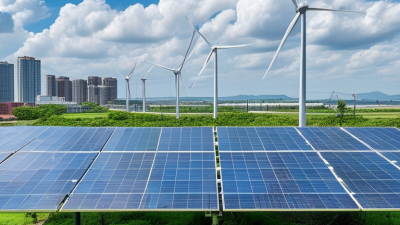
China has become a major source of green renewable energy solutions for utilities, factories, and commercial projects worldwide. Its suppliers cover solar modules, wind turbines, battery storage, inverters, and energy management systems. However, identifying the “top” supplier requires more than checking production volume or export claims.
A reliable evaluation should examine operating experience, engineering capability, product testing, and after-sales support. For example, a solar supplier may provide high-efficiency panels, but project owners also need stable performance under heat, dust, humidity, and heavy rain. Battery suppliers should demonstrate safety testing, thermal management, warranty clarity, and dependable monitoring software. Site references are valuable. A functioning 100-megawatt project often reveals more than a polished brochure.
Independent certifications and documented quality systems also deserve attention. International buyers may review IEC compliance, ISO management standards, factory inspections, and grid-connection experience. Financial strength matters too, because renewable projects can operate for twenty years or longer. A low initial price may become expensive when replacement parts arrive late or technical support is unavailable.
The market is not perfectly transparent. Rankings can change quickly. That gap matters. Some emerging manufacturers have strong technology but limited overseas service networks. Others offer broad portfolios without enough evidence from long-term projects. This guide compares leading Chinese suppliers through practical criteria, including product reliability, innovation, manufacturing scale, global delivery, and customer support. The aim is not to promote one company blindly. It is to help readers make a careful, evidence-based decision for cleaner and more resilient energy development.
Types of Green Renewable Energy Solutions in China
China Top Green Renewable Energy Solutions Suppliers?
China’s renewable energy market now covers several distinct solution types.
Solar photovoltaic systems lead new additions, from rooftop arrays on factories to utility-scale projects across western provinces.
The International Renewable Energy Agency reported 297.6 gigawatts of renewable capacity added in China during 2023. Solar contributed most of that growth.
Wind power remains important, especially in northern and coastal regions. Onshore turbines serve inland grids, while offshore projects face stronger winds and higher construction costs.
Hydropower provides flexible generation and supports grid stability, although environmental and geographic limits require careful planning.
Biomass systems use agricultural residues, livestock waste, and organic municipal waste. They can support local heating and electricity, but feedstock collection is often underestimated.
Geothermal energy offers steady heat for buildings in suitable areas, yet its potential is highly regional.
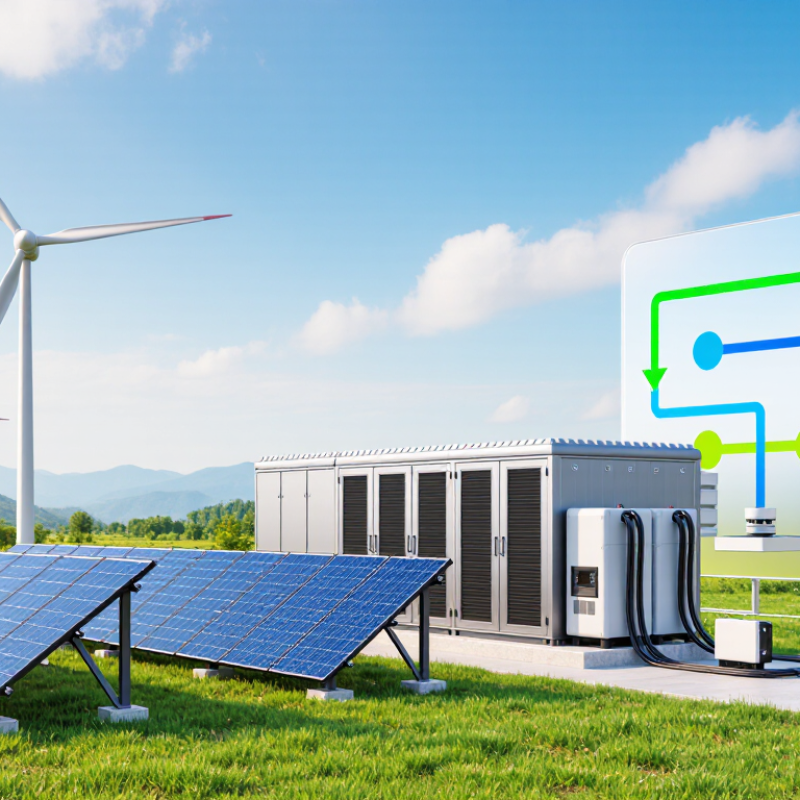
Battery storage is increasingly paired with solar and wind to manage evening demand.
Green hydrogen is another developing option for steel, chemicals, and heavy transport, though electricity use and infrastructure remain serious concerns.
The National Energy Administration reported that renewable sources exceeded half of China’s total installed power capacity by the end of 2023.
That figure is impressive.
It does not mean every project is efficient. Transmission delays, curtailment, land constraints, and recycling needs still affect real performance.
Reliable suppliers should therefore provide measured output data, maintenance records, safety documentation, and transparent lifecycle assumptions, rather than promising capacity alone.
Key Criteria for Evaluating Chinese Renewable Energy Suppliers
China Top Green Renewable Energy Solutions Suppliers?
When evaluating Chinese renewable energy suppliers, examine evidence, not polished presentations. Request factory audit records, production capacity data, and recent project references. A reliable supplier should explain where cells, inverters, storage units, and control systems are produced. Traceable serial numbers matter during maintenance.
Technical quality requires measurable details. Compare panel efficiency, temperature coefficients, battery cycle life, degradation rates, and expected operating temperatures. Ask for independent test reports and certificates recognized in your target market. Check whether products meet local grid codes and installation standards. Warranty terms should state response times, spare-part availability, and performance guarantees clearly.
Experience is visible in project execution. Study installations with similar weather, terrain, and grid conditions. Speak with previous customers when possible. Ask how the supplier handled delayed shipments, component failures, or software faults.
The cheapest quotation may hide weaker support. It happens often.
A factory tour can reveal testing equipment, worker training, and storage conditions, although one visit cannot prove everything. I would also request a small pilot order before committing to a large deployment. Even experienced buyers can overlook communication gaps, changing regulations, or unclear responsibility between supplier and installer.
Leading Chinese Suppliers by Renewable Energy Sector
China’s renewable energy supply base is broad, but sector-specific capability matters more than a simple supplier ranking. In solar photovoltaic manufacturing, leading suppliers typically cover modules, inverters, mounting systems, and monitoring equipment. A project team should examine conversion efficiency, temperature performance, degradation data, and factory quality controls. Site samples reveal details that brochures often hide. Dust, heat, and uneven rooftops can expose weak designs quickly. Field evidence matters.
For wind projects, established Chinese suppliers provide turbines, towers, control systems, and maintenance support for varied terrain. Buyers should review power curves, bearing records, grid compatibility, and spare-parts access. Energy-storage suppliers require a different assessment. Cell chemistry, thermal management, cycle testing, fire protection, and software reliability deserve close review. A container beside a substation needs more than impressive capacity figures. It needs stable operation during peak demand and harsh weather.
Hydropower equipment suppliers often specialize in turbines, generators, and automation for small or large installations. Biomass suppliers focus on feedstock handling, combustion efficiency, emissions control, and continuous fuel availability. Emerging hydrogen suppliers may offer electrolyzers, compression equipment, and integrated control systems, yet performance claims require independent testing. In my experience, the cheapest quotation rarely represents the lowest lifetime cost. No supplier fits every project. Procurement teams should verify certifications, production records, references, warranties, and after-sales response times. Some early assumptions fail. That is useful, if the review process catches them before construction.
China Renewable Energy Installed Capacity by Sector, 2023
China’s renewable energy installed capacity reached approximately 1,514 GW by the end of 2023. Solar power was the largest sector, followed by wind power and hydropower. These sector volumes indicate the relative scale of supplier opportunities across China’s renewable energy market. Data is based on publicly reported figures from China’s National Energy Administration.
Technologies and Services Offered by Top Chinese Suppliers
Chinese renewable energy suppliers now offer more than solar panels and wind turbines. Their portfolios often include photovoltaic modules, utility-scale wind systems, battery storage, smart inverters, and microgrid controls. These technologies can support factories, commercial buildings, remote communities, and public infrastructure.
Many suppliers also provide engineering, procurement, and construction services. Technical teams assess sunlight, wind conditions, land limits, and grid capacity before designing a system. They may manage installation, testing, and grid connection. Digital monitoring platforms track output, temperature, battery health, and equipment faults. Maintenance crews can then replace damaged parts before small issues become expensive failures.
Battery storage is becoming more important for projects with unstable renewable output. Suppliers may combine lithium-based storage with solar generation and backup controls. However, performance depends on climate, operating habits, and maintenance quality. A system that works well in a dry region may need different protection in humid coastal conditions. Site surveys are essential, but they are not always detailed enough. Buyers should request clear efficiency data, service response times, warranty terms, and spare-parts plans. Independent testing and careful contract review remain valuable, even when a supplier has strong technical experience.
How to Select a Suitable Chinese Renewable Energy Supplier
China’s renewable manufacturing scale is impressive, but scale is not proof. IRENA’s Renewable Capacity Statistics 2024 reports that China added 297.6 GW of renewable capacity in 2023. That represented about 63% of global additions. The IEA’s Renewables 2023 report also expects China to reach its 2030 renewable targets years ahead of schedule. Buyers still need project-specific evidence.
Define your requirements before comparing suppliers. Record annual output, peak demand, grid standards, storage duration, local climate, and installation conditions. Ask for independent test reports, factory audit records, production capacity, and material traceability. Verify certifications against the destination market, not only the export market. Test the evidence.
Compare lifetime cost, not the lowest quotation. Examine efficiency at high temperatures, degradation rates, battery cycle performance, warranty exclusions, spare-part availability, and response times. Request recent project references with similar weather and grid conditions. A small pilot shipment can reveal packaging weakness, inconsistent documentation, or poor technical support. Payment milestones should follow inspections and acceptance tests. A perfect spreadsheet can still hide practical gaps. I would also check communication speed, because delayed answers often become delayed repairs. This step is easy to underestimate.
| Supplier Category | Key Evaluation Dimensions | Documents and Evidence to Request | Relevant Standards to Check | Practical Selection Checks |
|---|---|---|---|---|
| Solar photovoltaic (PV) modules | Module power and efficiency; temperature coefficient; degradation and product warranties; production capacity; traceability of cells and materials. | Datasheet for the exact model; accredited test reports and certificates; warranty terms; serial-number traceability; factory audit and quality-control records. | IEC 61215 for design qualification and type approval; IEC 61730 for module safety qualification. | Confirm that certificates cover the offered model and manufacturing location. Compare warranty exclusions, degradation terms, and performance at the project’s operating temperature. |
| Solar and energy-storage inverters | Rated power; conversion efficiency; operating voltage range; protection functions; monitoring and communications; grid-support capability; service and spare-parts coverage. | Exact-model datasheet; safety and performance test reports; grid-code compliance evidence for the destination market; firmware and cybersecurity documentation; warranty and service procedures. | IEC 62109-1 and IEC 62109-2 address safety of power converters used in photovoltaic systems. Applicable local grid codes and connection rules must also be checked. | Verify compatibility with the PV modules, battery, and local grid requirements. Confirm who provides commissioning, firmware updates, and fault-response support. |
| Battery energy-storage systems | Usable energy and power; cell chemistry; operating temperature range; cycle-life test conditions; battery-management and thermal-management systems; safety design; recycling arrangements. | System configuration and datasheets; cell and system test reports; safety certificates; warranty conditions and capacity-retention definition; installation, operation, and emergency-response manuals. | IEC 62619 covers safety requirements for secondary lithium cells and batteries in industrial applications. Confirm additional requirements for the intended application and destination market. | Compare cycle-life claims only when test conditions, depth of discharge, temperature, and end-of-life criteria are stated. Check whether the certificate covers the complete system or only individual cells. |
| Wind turbines and wind-power equipment | Rated power and site suitability; wind class; operating limits; power-curve performance; noise; service plan; availability commitments; component supply and logistics. | Type certificate and design documentation; site-specific energy assessment; power-performance test report; operation and maintenance plan; spare-parts and warranty terms. | IEC 61400-1 covers wind-turbine design requirements; IEC 61400-12-1 specifies procedures for measuring wind-turbine power performance. | Check that the turbine design and power curve suit the actual site conditions. Review transport, installation, long-term service capability, and local permitting requirements. |
| Renewable-energy EPC and system integrators | Engineering capability; project references; scope clarity; safety management; schedule control; commissioning and performance testing; subcontractor management. | Comparable project references; design basis and equipment list; project schedule; quality and safety plans; commissioning protocol; acceptance criteria; responsibility matrix. | ISO 9001 is a quality-management-system standard. Confirm applicable electrical, building, environmental, and grid-connection rules for the project location. | Define boundaries for design, procurement, construction, grid connection, and after-sales service. Tie acceptance to agreed tests and clearly stated performance measures. |
| All supplier types | Legal identity and manufacturing location; financial and production capacity; quality controls; export experience; delivery terms; payment security; service responsiveness. | Business registration details; factory audit evidence; product-specific certificates; customer references; sample contract; inspection and shipment records; after-sales contacts. | ISO 9001 may be relevant to quality management, but it does not replace product-specific testing, certification, or destination-market compliance. | Verify documents with the issuing body, check that model numbers and factory sites match, and agree on independent pre-shipment inspection where appropriate. |
Standards are examples for due diligence, not a complete compliance list. Confirm current editions, certificate scope, and applicable local regulations for the specific product and project.
Related Posts
-
Top 10 Types of Clean Green Energy Solutions for Buyers
-
Top 10 Renewable Power Solutions for Global Buyers
-
How to Choose Green Power Solutions for Your Business?
-
Top 10 Innovative Renewable Energy Solutions from China?
-

Top 10 Innovative Renewable Energy Solutions for Global Buyers?
-
Top 10 Green Power Solutions Tips for Sustainable Energy Transition
CORPORATE HEADQUARTERS
North America
California
AGIC Energy North America LLC
13025 Danielson Street, Suite 105
Poway, CA 92064 – USA
Phone Number: +1 (858) 842 1513
Email: info@site_cc52bd27-560c-4f9d-bd66-63718fc42539
Sales: sales@site_cc52bd27-560c-4f9d-bd66-63718fc42539