+1 (858) 842-1249 

info@site_cc52bd27-560c-4f9d-bd66-63718fc42539 

sales@site_cc52bd27-560c-4f9d-bd66-63718fc42539

What Are the Top Solar Panel Solutions for Global Buyers?

Choosing the right solar panels solutions for global buyers requires more than comparing wattage and price. A reliable decision begins with local sunlight, roof structure, temperature, dust exposure, and grid conditions. A panel performing well in Spain may need different specifications in Kenya, Canada, or Southeast Asia. Monocrystalline modules often provide strong efficiency where roof space is limited. Thin-film options can suit lightweight structures, although their larger installation area may matter. No solution is perfect.

Experienced buyers also examine degradation rates, temperature coefficients, fire ratings, warranty terms, and supplier history. A product with a 25-year performance warranty still needs a dependable manufacturer behind it. Clear testing records, recognized certifications, and traceable materials can help reduce procurement risks. Independent laboratory data is more useful than impressive marketing language. So is practical installation evidence.

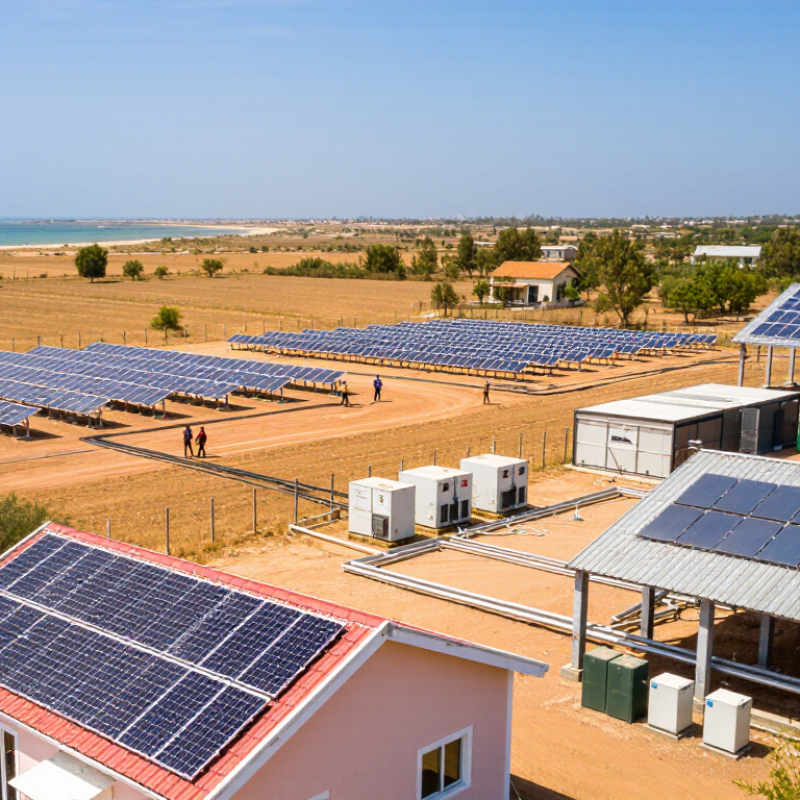
Global projects demand complete planning. Inverters, mounting systems, batteries, monitoring software, and replacement services must work together. A panel is only one part of the energy system. For example, a dusty farm installation may need easy cleaning access and a maintenance schedule. Coastal projects may require stronger corrosion resistance. Remote communities may prioritize spare parts and technician training over maximum efficiency.

This guide compares leading solar panels solutions through performance, durability, value, and service support. It also considers regional climate and regulatory expectations. Some conclusions may change as technology and supply chains develop. That uncertainty deserves attention. Buyers should verify current specifications with qualified installers and manufacturers before committing to large orders. Practical evidence matters most.
What Are the Top Solar Panel Solutions for Global Buyers?

Understanding Solar Panel Technologies for Global Markets

Solar panel selection for global markets begins with local conditions, not advertised peak efficiency. Monocrystalline modules suit limited rooftops because they produce strong output per square metre. TOPCon and heterojunction designs can reduce performance losses in hot conditions, though their price and supply vary by region. In humid coastal areas, buyers should examine corrosion resistance, moisture testing, and frame materials. Salt air is unforgiving.

Thin-film panels deserve attention where roofs are large, lightweight, or partly shaded. They can perform steadily in diffuse light, but usually require more installation space.

Bifacial modules may capture reflected light from pale roofs or open ground. Their value depends on mounting height, surface reflectivity, and local weather. A snowy site may benefit from an elevated design, while a dusty site needs practical cleaning access.

Reliable purchasing also means checking temperature coefficients, degradation warranties, fire classifications, and independent test reports. Grid compatibility matters just as much as the panel itself. Voltage ranges, connector standards, and certification requirements differ across markets. A professional assessment should model annual yield, not trust one laboratory rating. Field assessments often reveal problems hidden by simple calculations. Shading measured only at noon can distort expected production. Better decisions include seasonal shadows, replacement logistics, and installer capability. Even an excellent module can disappoint when spare parts travel slowly. Leave room for uncertainty. Weather rarely follows the brochure.

Comparing Efficiency, Durability, and Performance Across Climates

What Are the Top Solar Panel Solutions for Global Buyers?

Climate changes the answer. A high-efficiency module may perform differently in deserts, coastal zones, and snowy regions. The IEA PVPS Trends 2024 report recorded more than 1.6 terawatts of global solar capacity by the end of 2023. This scale makes climate-specific selection increasingly important.

In hot climates, temperature behavior matters more than laboratory efficiency. Crystalline-silicon modules commonly lose about 0.3% to 0.4% output for each degree above 25°C. Better ventilation, elevated mounting, and lower temperature coefficients can protect daily yield. Heat is unforgiving. In coastal areas, buyers should check IEC 61701 salt-mist testing. High humidity also demands careful attention to encapsulation and junction-box sealing. These details often matter more than a glossy efficiency figure.

Cold and snowy regions need stronger mechanical design. IEC 61215 testing addresses load and durability requirements, but local snow conditions still require engineering review. Fraunhofer ISE’s Photovoltaics Report shows that commercial module efficiencies continue to rise, with leading products now exceeding 23%. Higher efficiency helps when roof space is limited. It does not automatically guarantee better lifetime performance. The NREL degradation analysis found a median annual degradation rate near 0.5% for many crystalline-silicon systems. That figure is useful, but imperfect. Installation quality, dust, shading, and maintenance can change the outcome. No table replaces a site assessment.

Evaluating Costs, Incentives, and Total Ownership Value

For global buyers, solar panels should be judged by lifetime value, not the lowest invoice. A 10-kilowatt system may cost more upfront, yet produce steadier output for 25 years. Compare panel efficiency, degradation rate, warranty terms, inverter replacement, mounting, shipping, and local labor. A quotation excluding permits or grid connection can become expensive quickly. Ask for a line-item budget. Keep three quotes.

Incentives can change the purchase decision. Tax credits, rebates, feed-in payments, and reduced import duties vary by country and region. Confirm eligibility with the relevant energy authority before signing. Some programs require approved installers, local documentation, or installation deadlines. Currency movement also matters. A payment due in euros may feel different six months later. Insurance, cleaning, monitoring, and battery maintenance belong in the ownership model.

Use a cash-flow sheet with annual generation, electricity-price changes, degradation, financing interest, and disposal costs. Test a cloudy year, a lower tariff, and a delayed rebate. These checks expose optimistic payback claims. In my experience, rooftop shading at 3 p.m. can matter more than a small efficiency difference. I would also inspect local service capacity, not only product specifications. A failed inverter in a remote area can wait weeks. No model is perfect. Leave room for weather, repairs, and policy changes. Compare total cost per usable kilowatt-hour over the expected life.

What Are the Top Solar Panel Solutions for Global Buyers? - Evaluating Costs, Incentives, and Total Ownership Value

Indicative comparison of mainstream solar solutions for residential and small commercial buyers
Market / Solution Typical System Size Indicative Installed Cost Before Incentives Common Incentive or Support Expected Annual Yield Expected Service Life Typical Annual Maintenance Indicative Simple Payback Total Ownership Value Outlook
United States
Grid-connected home rooftop
5–8 kW US$2.20–3.50/W
US$11,000–28,000 total
A qualifying federal residential clean-energy credit may cover 30% of eligible costs; state, utility, and net-metering rules vary. 1,200–1,700 kWh per kW annually 25–30 years for modules; inverter commonly 10–15 years US$150–300 7–13 years Strong where electricity prices are high and export compensation is favorable; replacement of the inverter should be budgeted.
European Union
Self-consumption rooftop system
4–10 kW €1.20–2.20/W
€4,800–22,000 total
Support differs by country; some markets offer reduced VAT, grants, tax relief, or feed-in payments. Eligibility and payment rates change frequently. 900–1,300 kWh per kW annually 25–30 years for modules; inverter commonly 10–15 years €80–200 7–14 years Highest value generally comes from using solar electricity on-site, particularly in markets with high retail electricity prices.
Australia
Residential rooftop with optional battery
6.6–10 kW solar
5–15 kWh battery optional
Solar: A$1.00–1.80/W
Battery add-on: A$800–1,500/kWh
Small-scale technology certificates can reduce eligible solar-system costs; state battery programs and feed-in tariffs vary. 1,200–1,700 kWh per kW annually 25–30 years for modules; batteries commonly 10–15 years A$100–300 for solar; battery inspection may add cost Solar only: 4–8 years
Solar plus battery: 8–15 years
Solar-only systems usually provide the fastest return; batteries improve energy independence but may reduce financial returns unless peak tariffs or backup power are important.
India
Urban and suburban residential rooftop
2–5 kW ₹45,000–75,000/kW
₹90,000–375,000 total
Under the central residential subsidy schedule, eligible households may receive up to ₹78,000 for systems of approximately 3 kW or more; state support and eligibility rules apply. 1,300–1,700 kWh per kW annually 25 years or more for modules; inverter commonly 8–15 years ₹2,000–6,000 4–8 years after applicable subsidy Very attractive in areas with strong sunlight, reliable net metering, and high daytime electricity consumption.
Brazil
Grid-connected home or small business
4–10 kW R$3.50–6.50/W
R$14,000–65,000 total
Distributed-generation compensation is regulated nationally, while local taxes, financing, and utility procedures affect the final economics. 1,200–1,700 kWh per kW annually 25–30 years for modules; inverter commonly 10–15 years R$300–900 4–9 years Good long-term value in high-solar-resource regions, although grid charges, financing rates, and credit compensation should be modeled carefully.
Emerging and remote markets
Off-grid solar plus battery
1–5 kW solar
2–20 kWh battery
US$3.00–7.00/W for a complete system, including storage and basic installation Rural-electrification grants, development programs, concessional finance, and local subsidies may be available but are highly location-specific. 1,300–2,000 kWh per kW annually in high-sun regions 20–30 years for modules; batteries commonly 5–15 years depending on chemistry and use US$50–250, excluding battery replacement reserve 8–15 years compared with diesel or unreliable grid supply The value is often measured by avoided fuel, transport, and outage costs rather than electricity-bill savings alone.

Interpretation and assumptions: Costs are indicative 2024–2026 market ranges and exclude unusual roof work, taxes, financing interest, land acquisition, and major electrical upgrades. Actual results depend on system orientation, shading, local labor rates, electricity prices, export rules, exchange rates, and permitting.

Total ownership value considers upfront cost, applicable incentives, electricity production, expected bill savings, routine maintenance, degradation, and likely inverter or battery replacement over a 25-year evaluation period.

Reference framework: Assumptions are aligned with commonly reported ranges from international renewable-energy cost studies, national incentive programs, utility tariff structures, and standard photovoltaic performance estimates. Incentives should be verified with the relevant national authority, utility, or local installer before purchase.

Matching Panels to Residential, Commercial, and Utility Applications

Choosing solar panels starts with the building, not the product label. Residential buyers often need high-efficiency modules for limited roof space. A 6-kilowatt system may fit a small family home, but shading can reduce output sharply. Check the roof angle, afternoon shadows, and local weather patterns. Panels with strong temperature performance can help in hot climates. The inverter also matters because it manages daily energy conversion. From site reviews, I have learned that beautiful roof layouts can still perform poorly when vents and trees are ignored.

Commercial buildings need a different balance. Warehouses usually have broad, flat roofs, while offices may face stricter appearance requirements. Buyers should compare power density, mounting loads, maintenance access, and expected degradation. A panel with slightly lower efficiency may deliver better value if it costs less to install and clean. Keep records of energy use across seasons. Guessing from one utility bill is risky. Small errors in demand estimates can become expensive.

Utility-scale projects prioritize predictable output, financing confidence, and simple maintenance. Large sites may use bifacial panels, trackers, and central inverters, but these solutions require careful land and weather assessment. Dust, snow, wind, and high humidity can change the expected yield. Independent testing, transparent warranties, and recognized safety certifications deserve close attention. No selection is perfect. A realistic model should include equipment failure, cleaning delays, and weaker-than-expected sunlight, rather than presenting an ideal forecast.

Top Solar Panel Solutions for Global Buyers

Matching photovoltaic system designs to residential, commercial, and utility applications

Residential projects typically use compact high-efficiency monocrystalline modules, commercial projects favor scalable rooftop or ground-mounted systems, and utility projects commonly use large bifacial arrays with single-axis tracking. The chart shows representative system capacities of 6 kW, 250 kW, and 100 MW; actual project sizes vary by site, energy demand, available land, and local regulations.

Capacity values are representative planning benchmarks; the logarithmic scale makes the different application sizes easier to compare.

Selecting Suppliers, Certifications, Warranties, and Installation Support

For global buyers, the best solar panel solution starts with supplier discipline, not the lowest quotation. IRENA reported 473 GW of renewable capacity additions in 2023, including about 346 GW of solar. This growth increases supplier choices, but quality varies.

Request factory audit records, recent project references, and traceable serial numbers. Certifications such as IEC 61215 and IEC 61730 support module performance and safety assessment. ISO 9001 can indicate controlled processes, but it does not prove every panel is reliable.

Warranties need careful reading. Separate product warranties from performance warranties, and check who handles claims after installation. Ask about degradation rates, replacement timelines, shipping responsibility, and local legal coverage.

Installation support also matters. A supplier should provide structural drawings, cable layouts, commissioning procedures, and fault-response training.

The IEA’s Renewables 2024 report identifies solar PV as the main driver of renewable expansion. Yet rapid deployment can expose weak after-sales systems.

A panel may perform well in a laboratory, but dust, heat, salt air, and poor connectors change the outcome.

Tips: Compare at least three suppliers using one identical specification sheet. Verify certificates directly with the issuing body. Ask for a sample warranty claim process. Inspect mounting hardware, not only the module. Keep a small spare-parts plan. A perfect forecast is unrealistic; local installers may still need clarification. Record acceptance tests, photographs, and serial numbers before energising the system. That evidence can protect buyers when expectations and field results differ.

CORPORATE HEADQUARTERS

North America

California

AGIC Energy North America LLC
13025 Danielson Street, Suite 105
Poway, CA 92064 – USA
Phone Number: +1 (858) 842 1513
Email: info@site_cc52bd27-560c-4f9d-bd66-63718fc42539
Sales: sales@site_cc52bd27-560c-4f9d-bd66-63718fc42539