+1 (858) 842-1249 

info@site_cc52bd27-560c-4f9d-bd66-63718fc42539 

sales@site_cc52bd27-560c-4f9d-bd66-63718fc42539

Why Are Garment Labels Important for Global Buyers?

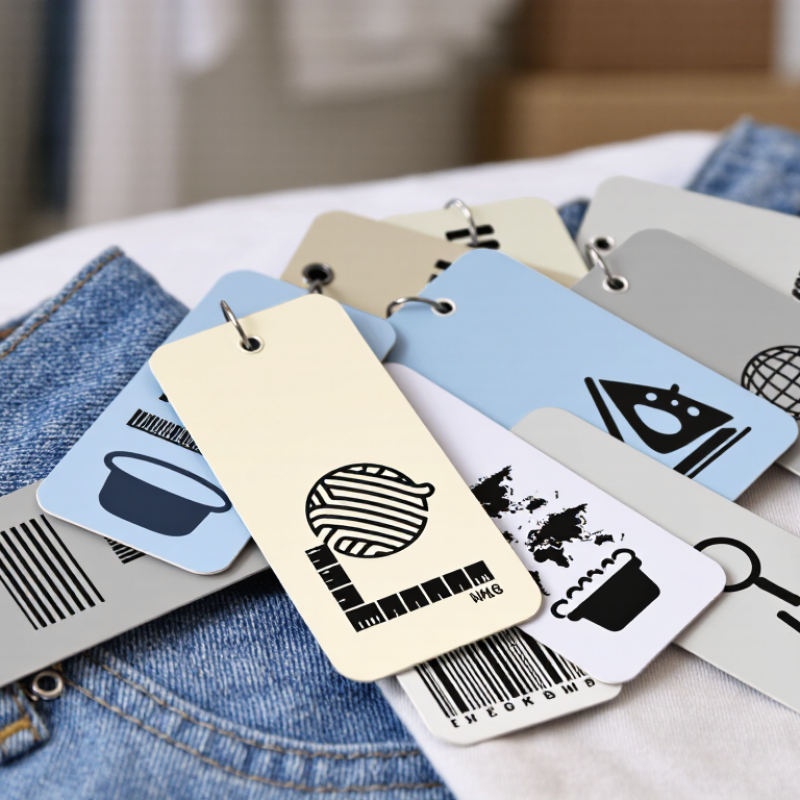
For global buyers, Garment Labels are small details with significant commercial consequences. They identify fiber content, size, care instructions, country of origin, and responsible parties. These details help buyers inspect products before shipment and reduce confusion during warehouse checks. A clear label can also support consistent retail presentation across different markets. It is not merely a branding tool.

Experienced sourcing teams often review labels during sampling, not after mass production begins. They compare printed information with technical sheets, purchase orders, and approved samples. A misplaced care symbol or unclear fiber percentage may create returns, customer complaints, or costly relabeling work. Sometimes, the problem begins with a rushed translation. Sometimes, nobody checks the final artwork.

Small errors matter.

Reliable Garment Labels should be readable, durable, and suitable for the product’s fabric and expected washing conditions. Buyers should confirm applicable labeling requirements in each destination market with qualified compliance professionals or local authorities. Rules can differ by product type and location, so one universal template may not be enough. Material suppliers, factories, and importers should keep approval records and revision histories. This practice improves traceability when questions arise.

Still, labels cannot guarantee product quality by themselves. They support responsible purchasing, but they do not replace factory audits, laboratory testing, or careful inspection. A label may look professional while the garment fails performance expectations. That uncomfortable possibility deserves attention. For international buyers, effective label management combines accurate information, practical experience, and disciplined verification from design to delivery.
Why Are Garment Labels Important for Global Buyers?

What Garment Labels Identify: Fiber Content, Size, Origin, and Care

Why Are Garment Labels Important for Global Buyers?

Garment labels give global buyers essential facts before a shipment reaches a warehouse. The fiber content shows what the fabric contains, such as cotton, polyester, wool, or blended fibers. This detail supports product descriptions, sourcing decisions, and customer expectations. A label reading “60% cotton, 40% polyester” is more useful than a vague term like “soft blend.”

Size information must match the buyer’s measurement system and approved sample. A medium in one market may not fit like a medium elsewhere. Measurements in centimeters can reduce confusion during inspections. Small details matter. I have seen correct garments delayed because the sewn-in size label differed from the packing list.

Origin information identifies where the garment was manufactured or substantially processed. Care instructions explain washing temperature, drying methods, ironing limits, and bleaching restrictions. These symbols need to remain readable after repeated washing. Poor contrast or tiny printing can create avoidable complaints. Buyers should check labels against test reports, production samples, and purchase specifications. They should also review destination-market requirements with qualified local experts, since labeling expectations can vary. A label may be technically accurate yet still feel confusing to the final customer. That is where careful review matters.

Why Are Garment Labels Important for Global Buyers?

Required garment-label information varies by market. Fiber content and origin are especially important for customs, compliance, and consumer transparency.

The chart shows whether each label element is generally required under the main textile-labeling rules in the United States, European Union, and United Kingdom. “1” means generally required by the relevant textile-labeling framework; “0” means not generally required at union or federal level. Product-specific exceptions may apply.

Sources: U.S. Federal Trade Commission Textile Labeling and Care Labeling Rules; EU Regulation (EU) No 1007/2011; UK Textile Products (Labelling and Fibre Composition) Regulations 2011.

How ISO 3758:2012 Standardizes Care Symbols Across Export Markets

Garment labels are small, but global buyers read them as technical instructions. When shipments cross borders, written care advice may be translated unevenly. ISO 3758:2012 provides a common language through care symbols for textiles. It covers washing, bleaching, drying, ironing, and professional textile care. A symbol can travel more reliably than a paragraph. This matters.

From practical export sample reviews, symbol accuracy affects more than consumer convenience. Buyers compare labels with test reports, product specifications, and packaging files. A crossed tub warns against washing, while dots inside an iron indicate temperature limits. Lines beneath a tub describe gentler mechanical action. These details help factories, importers, and consumers reduce avoidable damage. Yet ISO 3758:2012 does not replace every destination market’s labeling rule. That distinction is easy to miss.

Reliable implementation starts before production. Teams should confirm fiber content, dye behavior, trims, coatings, and validated care tests. The selected symbols should match the tested garment, not merely a similar style. A label may look correct, then fail after shrinkage testing. That delay is preventable. Buyers should retain artwork approvals, test evidence, and revision records. They should also check symbol reproduction, spacing, and durability after laundering. ISO 3758:2012 improves consistency, but human review remains necessary. A neat label can still carry the wrong instruction.

Why EU Regulation 1007/2011 Requires Fiber-Composition Disclosure

Garment labels are a practical compliance tool for global buyers. In the European Union, Regulation (EU) No 1007/2011 requires textile products to disclose their fiber composition. The label must use approved fiber names and show each percentage by mass. For blended fabrics, fibers are generally listed in descending order. “100% cotton” and “65% polyester, 35% cotton” communicate very different product qualities.

The information must be clear, legible, durable, and available in the official language of the EU country where the product is sold. A label sewn inside a jacket should remain readable after repeated washing. Buyers should also check whether the label matches the technical file, purchase specification, and actual fabric. A neat label can still hide a weak process. Last-minute material changes may make accurate artwork wrong. I would not treat a supplier declaration as final proof without reviewing supporting records or test results.

Tips: Request fiber test reports, fabric swatches, and final label artwork before production. Confirm translations for each target market. Keep approved documents with inspection records. Recheck composition when recycled fibers, coatings, or mixed trims are involved. Small details matter. Mistakes often begin with an unrecorded fabric substitution.

How U.S. FTC Rules Require Fiber, Origin, and Supplier Details

Why Are Garment Labels Important for Global Buyers?

For global buyers, a garment label is a compliance document, not decoration. Under the U.S. Federal Trade Commission’s Textile Labeling Rule, most covered products must disclose fiber content, country of origin, and the manufacturer’s or dealer’s identity. A registered identification number, or RN, may replace the business name. The origin statement must remain clear and easy to find. “Made in” should not disappear inside a crowded seam.

This becomes harder as materials and supply chains grow more complex. Textile Exchange’s Materials Market Report 2024 estimates global fiber production reached 124 million tonnes in 2023. It could approach 160 million tonnes by 2030. More volume means more blends, recycled inputs, and supplier handoffs. Buyers should compare labels with purchase orders, laboratory reports, and factory records. Details matter. The FTC rule does not require every factory to appear on the label, but it does require responsible business identification. That distinction is often missed.

The Ellen MacArthur Foundation’s A New Textiles Economy estimates that less than 1% of clothing material becomes new clothing fibers. Therefore, recycled claims need careful document checks. A label is useful, but it is not proof of perfect traceability. I have seen small percentage errors create large approval delays. Better review happens before bulk production, not after cartons reach a warehouse.

Why Are Garment Labels Important for Global Buyers? - How U.S. FTC Rules Require Fiber, Origin, and Supplier Details

Compliance Dimension U.S. FTC Requirement Required or Typical Label Data Buyer Verification Point Practical Example
Fiber content Most covered textile products must disclose the generic fiber names and the percentage by weight of each fiber. Fiber names listed in descending order by percentage, such as “65% Cotton, 35% Polyester.” Match the label percentages with the bill of materials, approved sample, and laboratory or mill test records. A fabric containing 60% cotton and 40% polyester should not be labeled as 50% cotton and 50% polyester.
Minor fibers A fiber present at less than 5% may generally be identified as “other fiber,” unless it has a functional significance or the applicable rule requires a more specific disclosure. Specific fiber percentages for major fibers and an accurate “other fiber” disclosure where permitted. Check whether a small-percentage fiber affects performance, appearance, warmth, stretch, or other product characteristics. A 3% elastane component used to provide stretch may require specific treatment rather than being treated as an insignificant fiber.
Generic fiber terminology Labels should use fiber names recognized by the FTC, rather than unsupported trade descriptions or marketing terms. Recognized names such as cotton, wool, rayon, acetate, nylon, polyester, acrylic, and spandex, when applicable. Confirm that the wording describes the actual fiber and does not replace required content with a promotional name. A technical or marketing term should not replace the required generic fiber name unless the term has been accepted for that purpose.
Country of origin Covered textile products imported into the United States generally need the English name of the country where the product was manufactured or processed. For example: “Made in Vietnam,” “Made in India,” or another accurate English country-of-origin statement. Compare the label with customs documents, production records, assembly operations, and the declared manufacturing location. If substantial manufacturing occurs in one country, the origin statement must accurately reflect the applicable origin determination.
U.S. content claims A product made in the United States with imported materials may require a qualified claim that identifies the imported content. A statement such as “Made in U.S.A. of imported fabric,” when supported by the applicable facts. Verify the manufacturing sequence and the origin of materials before approving an unqualified U.S.-origin claim. Do not use an unqualified “Made in U.S.A.” statement when a significant material or manufacturing input is imported.
Responsible business identity The label generally must identify the manufacturer, importer, distributor, or dealer responsible for marketing the product in the United States. The responsible business name or an FTC-issued Registered Identification Number (RN), where permitted. Confirm that the legal entity or RN is valid, traceable, and connected to the shipment and import records. A factory name alone may not satisfy the requirement if another entity is the responsible U.S. importer or marketer.
RN traceability An RN is used in place of a business name on applicable textile labels and is assigned through the FTC’s registration system. A valid RN associated with the responsible U.S. business or importer. Check the RN against the FTC RN database and ensure the same responsible entity appears in purchase and import documentation. An invalid, inactive, or unrelated RN can make an otherwise complete label non-compliant.
Label placement and visibility Required information must be legible, accessible, and presented in a form that allows consumers to find and read it. A durable label or marking containing fiber, origin, and responsible-party information in clear English. Inspect readability after washing, finishing, folding, packaging, and normal handling. A required label hidden by packaging or printed in unreadably small or low-contrast text creates a compliance risk.
Care instructions The FTC Care Labeling Rule generally requires reliable care instructions for covered apparel and certain textile products. Written washing, bleaching, drying, ironing, and dry-cleaning instructions as applicable. Confirm that the care method is supported by product testing and is consistent with the garment’s components and construction. If a garment cannot safely tolerate chlorine bleach, the care label should not recommend chlorine bleaching.
Wool and specialty fibers Wool products may be subject to additional disclosure requirements under the Wool Products Labeling Act, including fiber content, origin, and responsible-party information. The required wool fiber description, percentage information, country of origin, and responsible business identity. Determine whether the product contains wool and review the applicable wool-specific labeling requirements before shipment. A wool-blend garment should be reviewed under both the general textile labeling rules and the wool-specific rules.
Buyer document controls The information on the label should be truthful, substantiated, and consistent with the product and transaction records. Approved label artwork, bill of materials, test reports, origin records, supplier declarations, and shipment documents. Use a pre-shipment checklist and retain evidence supporting every regulated label statement. A change in yarn, fabric mill, finishing process, or importer should trigger a label and compliance review.

Reference framework: U.S. Federal Trade Commission Textile Labeling Rules, Wool Products Labeling Act requirements, and FTC Care Labeling Rule. Requirements may vary by product type, material composition, and import arrangement.

How GS1 GTIN-13 and RFID Data Strengthen Garment Traceability

Why Are Garment Labels Important for Global Buyers?

How GS1 GTIN-13 and RFID Data Strengthen Garment Traceability

A garment label is more than a size marker. It can connect a physical shirt to verified product data. GS1 GTIN-13 identifies the trade item, while RFID adds a unique electronic identity to each unit. Together, they support cleaner records across factories, warehouses, and customs checkpoints.

The detail matters. A GTIN-13 can identify a black cotton shirt in size medium. RFID can identify one specific shirt from that group. A reader can capture it without opening every carton. Auburn University’s RFID Lab has reported inventory accuracy above 95% in mature retail deployments. That improvement can reveal missing units, incorrect shipments, and slow-moving stock earlier.

Traceability still depends on disciplined data. A poorly assigned GTIN creates confusion. An unreadable tag creates silence. GS1 standards define how identifiers should be structured, but companies must connect them with purchase orders, batch records, and shipment events. UNEP estimates that the world generates about 92 million tonnes of textile waste annually. Better visibility may help reduce avoidable overproduction, although labels alone cannot solve waste.

There is a practical weakness. RFID scans can fail near metal equipment or dense cartons. Human checks remain necessary. Global buyers should test labels in real warehouse conditions, not only in spreadsheets. A reliable label is small, but its data trail must remain consistent from cutting table to receiving dock.

Article Source:

CORPORATE HEADQUARTERS

North America

California

AGIC Energy North America LLC
13025 Danielson Street, Suite 105
Poway, CA 92064 – USA
Phone Number: +1 (858) 842 1513
Email: info@site_cc52bd27-560c-4f9d-bd66-63718fc42539
Sales: sales@site_cc52bd27-560c-4f9d-bd66-63718fc42539