Top 10 Clean Energy Storage Solutions in China?
China’s clean-energy buildout is creating a practical need: storing electricity when wind and solar output exceed demand, then releasing it during evening peaks or calm weather. This guide explores ten clean energy storage solutions used or developed across China, from large pumped-hydro facilities to grid-connected battery systems. Some are already operating at scale. Others remain in demonstration or early commercial stages.
The technologies serve different jobs. Pumped hydro can shift power across many hours, but it needs suitable terrain and substantial construction. Lithium-ion batteries respond quickly and fit beside solar farms, substations, and urban loads. Sodium-ion, flow batteries, compressed-air storage, thermal storage, hydrogen, and flywheels offer other combinations of duration, materials, and operating needs. No single option fits every province or project. That matters.
This overview compares storage duration, response speed, maturity, siting demands, and likely applications, while distinguishing proven deployments from promising claims. Project performance depends on local grid conditions, safety engineering, financing, and access to reliable data. Public figures may use different measurement methods, so rankings are a guide, not a definitive scorecard. The picture is still changing. Some technologies may prove less useful than forecasts suggest, and that deserves honest scrutiny. By examining the trade-offs behind each solution, readers can better understand how China is building a more flexible power system—and where important uncertainties remain.
Defining Clean Energy Storage and China’s 2023 Baseline: 31.39 GW, 66.87 GWh
Clean energy storage captures electricity when supply is abundant and releases it when demand rises. In China, “new-type energy storage” generally means technologies other than pumped hydro, including batteries, compressed air, and flywheels. The category matters: figures for it should not be confused with the country’s entire storage fleet.
China’s National Energy Administration reported that new-type storage reached 31.39 gigawatts of power capacity and 66.87 gigawatt-hours of energy capacity by the end of 2023. The China Energy Storage Alliance’s 2024 industry report put average storage duration at about 2.1 hours.
A useful baseline. Gigawatts show how quickly systems can deliver electricity; gigawatt-hours show how much they can supply over time.
The figures also reveal a limitation: national totals do not show where storage is located, how often it cycles, or whether it aligns with local wind and solar output. A two-hour unit may help manage a short evening peak, but longer shortages need different planning. The headline numbers are impressive, yet they are only part of the story.
The Top 10 Solutions: From Pumped Hydro to Sodium-Ion Batteries
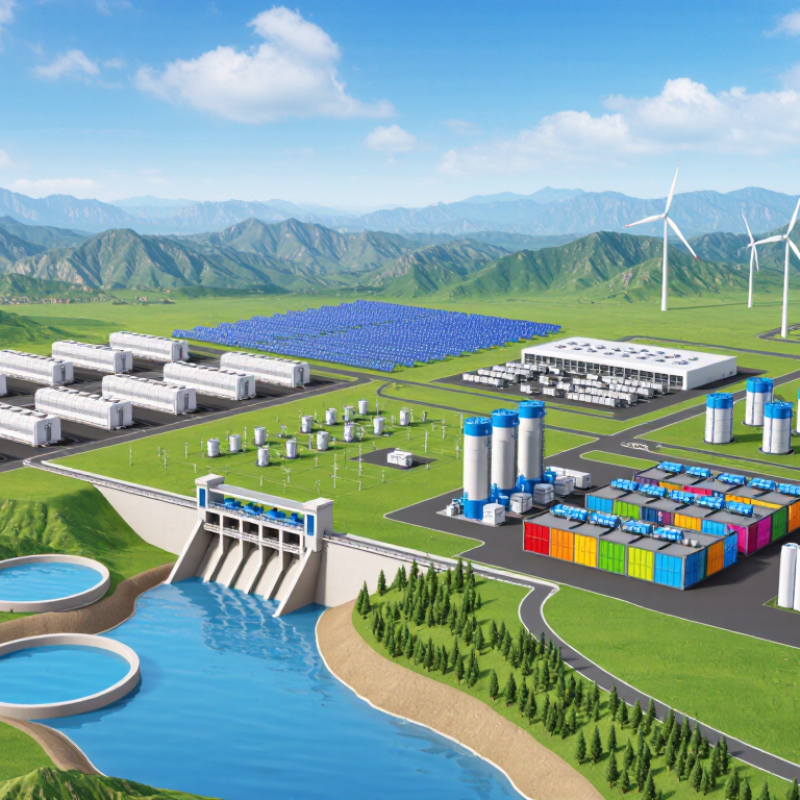
China’s clean-energy storage options range from established pumped hydro to newer sodium-ion batteries. Pumped hydro moves water between reservoirs, storing energy for hours or longer. Lithium-ion batteries respond quickly and suit grid balancing. Sodium-ion systems use different materials and may fit some stationary uses. Flow batteries store energy in liquid electrolytes, while compressed-air systems use underground spaces or pressure vessels.
Thermal storage keeps heat in materials such as molten salt or packed rock. Hydrogen can store surplus electricity, though converting it back involves energy losses. Flywheels deliver rapid, short bursts of power. Supercapacitors handle quick charge-and-discharge cycles, and gravity systems raise heavy weights before lowering them to generate electricity. The ranking is not fixed; local terrain, grid needs, safety, cost, and duration all matter. Some options sound simpler on paper than they are in the field.
Tips: Match storage duration to the job. Check site conditions, maintenance needs, and end-of-life plans. Compare measured performance, not just project announcements. A neat list can hide trade-offs, and real operating data may change the picture.
Comparing Technologies: Lithium-Ion Round-Trip Efficiency of 85–95%
Across China’s clean-energy storage market, lithium-ion batteries are widely used where compact design and fast response matter. Published round-trip efficiency commonly falls around 85–95%, but the figure depends on test conditions and system boundaries. For a system rated at 90%, roughly 10 kWh may return for every 11.1 kWh charged, before considering site loads or auxiliary equipment. Useful, but not universal.
Actual performance shifts with temperature, charge rate, inverter losses, and battery age. A humid coastal site and a cold inland installation may not deliver identical results. At a solar farm, efficiency also depends on how often the battery cycles and how long it sits partially charged. Operators should compare test methods, usable capacity, and expected degradation, not just the headline percentage. The comparison is imperfect: efficiency alone cannot show whether storage fits a project’s duration or grid needs. A percentage can look reassuring, yet hide losses in pumps, cooling, and conversion equipment.
China’s Deployment Mix: 50.94 GW of Pumped-Storage Hydropower in 2023
China’s reported pumped-storage hydropower capacity reached 50.94 GW in 2023. That is a substantial part of the country’s energy-storage mix, measured as power capacity rather than stored energy. The distinction matters: gigawatts show how quickly plants can deliver electricity, but not how long they can sustain output.
A pumped-storage station uses two reservoirs at different elevations. When electricity is plentiful, pumps move water uphill; when demand rises, the water flows back through turbines. The process can help balance variable wind and solar generation, especially during evening peaks. It is not a source of new energy, though. Pumping consumes more electricity than the station later returns.
The national figure signals considerable infrastructure, but it cannot show where capacity sits or how often each plant operates. Local grid connections, water availability, terrain, and reservoir design all shape performance. Construction also takes time and can alter landscapes and water systems. One caveat is easy to miss: capacity alone says little about these trade-offs. Better comparisons would include storage duration, operating data, and site-level environmental effects.
Top 10 Clean Energy Storage Solutions in China? — China’s Deployment Mix: 50.94 GW of Pumped-Storage Hydropower in 2023
An overview of major storage technologies used or demonstrated in China, covering typical technical characteristics and grid applications.
| Rank | Storage Solution | How It Stores Energy | Typical Discharge Duration | Indicative Round-Trip Efficiency | China Deployment Context | Best-Suited Applications |
|---|---|---|---|---|---|---|
| 1 | Pumped-Storage Hydropower | Moves water between upper and lower reservoirs, storing electricity as gravitational potential energy. | Several hours to more than a day | 70–85% | Established at utility scale. China’s installed pumped-storage capacity reached 50.94 GW at the end of 2023. | Bulk energy shifting, peak supply, reserve capacity and balancing variable renewables. |
| 2 | Lithium-Ion Battery Storage | Stores and releases electricity through reversible electrochemical reactions. | Typically 1–4 hours; longer-duration systems are also possible. | 85–95% | Widely used in grid-scale projects and paired with solar and wind generation; also common in commercial and industrial applications. | Fast grid response, renewable-energy shifting, peak shaving and frequency regulation. |
| 3 | Thermal Energy Storage | Stores heat or cold in materials such as molten salts, water, rocks or phase-change media. | Several hours to multiple days, depending on system design. | Varies widely; approximately 40–90% for electricity-to-electricity systems. | Used in concentrated solar power projects and in heating, cooling and industrial heat applications. | Shifting solar heat to later hours, district heating, cooling and industrial process-heat management. |
| 4 | Vanadium Redox Flow Batteries | Stores energy in liquid electrolytes held in external tanks; power and energy capacity can be scaled separately. | Typically 4–12 hours | 65–85% | Utility-scale demonstration and deployment projects have been developed for renewable integration and long-duration grid storage. | Multi-hour storage, frequent cycling and stationary applications where long service life is valuable. |
| 5 | Compressed-Air Energy Storage | Uses electricity to compress air for later expansion through equipment that generates electricity. | Typically 4–10 hours; project designs vary. | 40–70% | Large demonstration projects have been built in China, including projects designed for grid-scale renewable integration. | Long-duration energy shifting, peak management and balancing wind and solar output. |
| 6 | Sodium-Ion Battery Storage | Stores electricity through sodium-ion movement between battery electrodes. | Typically 1–4 hours in current grid-oriented designs. | Approximately 80–90% | Commercialization and grid-storage demonstrations are developing; the technology is being explored as an alternative for stationary applications. | Short-duration grid storage and applications prioritizing resource diversity and cost potential. |
| 7 | Hydrogen-Based Storage | Uses electricity to produce hydrogen, stores it, then uses it as fuel or converts it back to electricity. | Hours to seasonal timescales, depending on storage method. | About 25–45% for electricity-to-hydrogen-to-electricity pathways. | Demonstration and pilot activity is linked to renewable hydrogen production, industrial use and integrated energy systems. | Long-duration or seasonal storage and linking renewable electricity with industry and transport. |
| 8 | Flywheel Energy Storage | Stores electricity as rotational kinetic energy in a rapidly spinning rotor. | Seconds to around 30 minutes | 85–95% | Used or demonstrated in specialized grid and power-quality applications where very fast response is important. | Frequency response, voltage support, power-quality management and short-duration bridging. |
| 9 | Supercapacitor Storage | Stores energy electrostatically at the interface between electrodes and an electrolyte. | Seconds to several minutes | 90–98% | Applied in high-power, short-duration settings, including power smoothing and transport-related systems. | Rapid power bursts, transient support, regenerative braking and voltage stabilization. |
| 10 | Lead-Acid Battery Storage | Stores electricity through reversible chemical reactions involving lead-based electrodes and an electrolyte. | Typically 1–4 hours, depending on design and duty cycle. | 70–85% | A mature battery technology used mainly in backup and stationary applications; newer grid projects often consider alternative chemistries. | Backup power, standby systems and applications where established operating practices are important. |
Note: The ranking is an editorial overview, not an official league table. Duration and efficiency figures are indicative ranges; actual performance depends on system design, operating conditions and project configuration. China’s 50.94 GW pumped-storage figure refers to installed capacity at the end of 2023.
Selecting Storage by Cost, Safety, Lifespan, and Grid Needs
Top 10 Clean Energy Storage Solutions in China?
Selecting Storage by Cost, Safety, Lifespan, and Grid Needs
China’s storage options range from pumped hydro and lithium-ion batteries to sodium-ion, flow batteries, compressed air, thermal storage, flywheels, and hydrogen systems. Each serves a different job. Pumped hydro can support large, long-duration needs, but requires suitable terrain and significant construction. Battery systems can respond quickly, though costs and performance depend on project design and operating conditions. No option wins everywhere.
Compare total cost, not just the purchase price. Include installation, maintenance, replacement, and expected efficiency losses. Safety first. Review thermal controls, spacing, ventilation, fire response plans, and site-specific hazards. Lifespan matters too: frequent cycling can affect some systems more than occasional backup use. Grid needs should guide the choice. A solar farm facing evening demand may value several hours of discharge; a substation managing brief fluctuations may need fast response instead. A tidy spreadsheet can still miss local weather or connection delays.
Tips: Ask operators how storage will cycle during a typical week, then test assumptions against seasonal demand. Check warranties and degradation estimates carefully. Pilot projects can reveal practical issues, but small trials may not predict full-scale performance. Be willing to revise the plan when site data disagrees with the original forecast.
Top 10 Clean Energy Storage Solutions in China
Typical discharge duration varies with system design. Bars show illustrative representative values; hover for broad technology ranges.
Longer-duration options can help address extended renewable-energy gaps, while batteries, flywheels, and supercapacitors can serve shorter-duration needs. Discharge duration alone does not determine the best choice: project cost, safety requirements, service life, location, and grid needs also matter. Values are indicative technology ranges, not rankings or China-specific project measurements.
Related Posts
-
10 Tips for Choosing Renewable Energy Storage Solutions
-
How to Choose Home Energy Storage Solutions?
-
Top Innovative Energy Storage Solutions for a Sustainable Future?
-
2026 Top Green Energy Storage Solutions for a Sustainable Future?
-
Top Energy Storage Solutions for a Sustainable Future?
-
Top 10 Solar Storage Solutions for Global Buyers to Consider?
CORPORATE HEADQUARTERS
North America
California
AGIC Energy North America LLC
13025 Danielson Street, Suite 105
Poway, CA 92064 – USA
Phone Number: +1 (858) 842 1513
Email: info@site_cc52bd27-560c-4f9d-bd66-63718fc42539
Sales: sales@site_cc52bd27-560c-4f9d-bd66-63718fc42539