
How to Choose a Portable Power Station?
Choosing a Portable Power Station requires more than comparing battery capacity. The largest model is not always the most useful. Your decision should begin with real situations, such as charging phones during travel, running a refrigerator during an outage, or powering lights at a campsite.
Will Prowse, a respected solar and battery reviewer, says, “The best power station is not the biggest one; it is the one matched to your real energy needs.” That principle is practical. Check the watt-hours, continuous output, and surge capacity. A refrigerator may draw modest power while running, yet demand much more during startup. Small details matter.
A reliable guide should also examine battery chemistry, charging speed, port selection, and inverter quality. Lithium iron phosphate batteries often provide longer service life and improved thermal stability. Pure sine wave output is important for sensitive electronics. USB-C ports can reduce adapters and cable clutter. Outdoor users should inspect weight, handles, display readability, and weather limitations.
Do not trust impressive numbers alone. Test your likely devices together, if possible. My own evaluation would include a loaded power test, not just an empty-room demonstration. That approach reveals heat, fan noise, and unexpected battery loss. I may still overlook a personal use case, especially in extreme cold or humid conditions. Therefore, this article will compare Portable Power Station features through practical examples, transparent limitations, and safety-conscious recommendations.
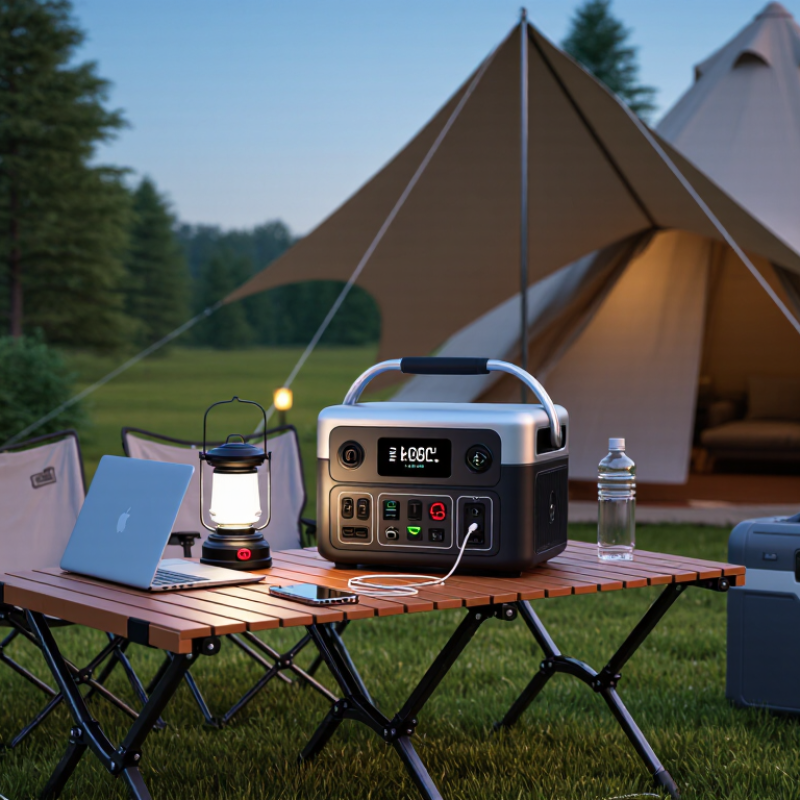
Define Your Portable Power Needs and Usage Scenarios
How to Choose a Portable Power Station?
Before comparing capacity, define what you actually need to power. A weekend photographer may need energy for camera batteries, a phone, and a small laptop. A family at a campsite may also require lights, a cooler, and a compact cooking device. Write down each device, its wattage, and expected daily running time. Small details matter.
Think about where the power station will be used. For car travel, weight and handle design can matter more than maximum capacity. At home, a larger unit may support essential devices during short outages. Check the starting wattage of equipment with motors, such as small refrigerators. Their initial demand can exceed their normal operating wattage.
Be realistic about charging conditions. A unit charged from a vehicle may serve a different purpose than one charged from a wall outlet or solar panel. I once underestimated how often a cooler restarted, and my estimated runtime became unreliable. That mistake changed my planning. Weather can also reduce solar charging, especially under clouds or partial shade. Leave some reserve capacity. You may need it later.
Look for clear safety information, overload protection, battery specifications, and a suitable operating temperature range. These details are more useful than impressive capacity figures alone. If your usage is uncertain, record one typical day of energy consumption before buying. It may reveal that your preferred model is either excessive or insufficient.
How to Choose a Portable Power Station? - Define Your Portable Power Needs and Usage Scenarios
Match the power station's usable capacity, continuous output, surge capability, and portability to the devices you plan to run.
| Usage Scenario | Typical Devices | Estimated Energy Need | Approximate Peak Load | Recommended Usable Capacity | Recommended Continuous Output | Important Selection Factors | Portability Level |
|---|---|---|---|---|---|---|---|
| Phone & Small Electronics | Smartphone, tablet, camera, wireless earbuds, small LED light | 30–120 Wh per day | 50–150 W | 100–300 Wh | 150–300 W | USB-C output, USB-A ports, low standby consumption, compact size | Very high; suitable for backpacks |
| Laptop Work & Remote Study | Laptop, monitor, phone, desk lamp, Wi-Fi router | 250–600 Wh for 6–8 hours | 150–400 W | 500–800 Wh | 300–600 W | Pure sine wave AC output, USB-C Power Delivery, quiet operation, multiple outlets | High; generally easy to carry |
| Camping & Outdoor Recreation | LED lights, phones, camera batteries, portable speaker, small cooler | 300–900 Wh per day | 300–800 W | 500–1,000 Wh | 500–800 W | Low weight, durable housing, solar charging input, good outdoor temperature range | Medium to high; check weight before purchase |
| CPAP Overnight Use | CPAP machine, humidifier if required, phone, reading light | 250–500 Wh for 8 hours | 150–400 W | 500–1,000 Wh | 300–600 W | Confirm the CPAP's DC or AC requirements, disable unnecessary humidification when appropriate, and allow reserve capacity | Medium; prioritize dependable overnight operation |
| Small Appliance Support | Mini fridge, electric blanket, small fan, lighting, device chargers | 500–1,200 Wh per day | 800–1,500 W | 1,000–1,500 Wh | 1,000–1,500 W | High surge capability, pure sine wave output, thermal protection, efficient inverter | Medium; often includes a carry handle or wheels |
| Emergency Essentials | Router, phones, LED lights, medical electronics, radio, small fan | 500–1,500 Wh per day | 500–1,200 W | 1,000–2,000 Wh | 800–1,500 W | Fast wall charging, UPS or pass-through capability, clear battery display, long storage life | Medium to low; wheels are useful above 15 kg |
| Refrigerator Backup | Full-size refrigerator, freezer, router, essential lighting | 1,500–3,000 Wh per day, depending on conditions and duty cycle | 1,200–2,500 W | 2,000–3,000 Wh | 1,500–2,000 W | Verify compressor starting surge, use a pure sine wave inverter, and calculate runtime using the refrigerator's measured consumption | Low; choose a wheeled design |
| Power Tools & DIY Projects | Drill, jigsaw, sander, work light, battery chargers | 500–2,000 Wh per work session | 1,000–2,500 W | 1,000–2,000 Wh | 1,500–2,400 W | High surge rating, strong thermal management, fast recharge, robust AC outlets | Low to medium; weight is acceptable for job-site use |
| High-Draw Heating or Cooking | Hot plate, kettle, toaster, hair dryer, portable heater | 1,000–3,000 Wh per short-use period | 1,500–2,500 W | 2,000 Wh or more | 2,000–3,000 W | High output alone is not enough; heating appliances drain batteries quickly, so compare watt-hours and expected runtime carefully | Low; typically requires wheels |
- Estimate energy use with: watts × hours of operation = watt-hours (Wh).
- Choose extra capacity for inverter losses, temperature effects, battery aging, and unexpected usage. A practical reserve is approximately 20–30%.
- Check both continuous output and surge output. Motors and compressors can briefly require two to five times their running power.
- Actual runtime varies by device efficiency, operating cycle, battery temperature, charging losses, and the power station's usable battery capacity.
CORPORATE HEADQUARTERS
North America
California
AGIC Energy North America LLC
13025 Danielson Street, Suite 105
Poway, CA 92064 – USA
Phone Number: +1 (858) 842 1513
Email: info@site_cc52bd27-560c-4f9d-bd66-63718fc42539
Sales: sales@site_cc52bd27-560c-4f9d-bd66-63718fc42539