Top 10 Tips for Choosing the Right Bandpass Filters?
Choosing the right Bandpass Filters can significantly impact various engineering applications. According to a report by MarketsandMarkets, the global market for bandpass filters is projected to grow at a CAGR of 6.5% from 2021 to 2026. This growth reflects the increasing demand for high-quality signal processing in telecommunications and aerospace industries. Experts like Dr. Jane Patel, an authority in optical filters, emphasizes, "Selecting the right filter is crucial for achieving optimal performance in your system."
In the realm of signal processing, precision is paramount. Bandpass Filters enable the transmission of specific frequency ranges while blocking others. However, the intricacies involved in their selection are often underestimated. Factors like bandwidth, insertion loss, and cost play critical roles. A misguided choice can lead to degraded system performance, highlighting the importance of informed decision-making.
Reflections on these choices reveal that technology is always evolving. The increasing complexity of systems demands a deeper understanding of Bandpass Filters. Engineers must stay updated with the latest advancements to make informed selections. The right filter can enhance efficiency, but even small miscalculations can lead to significant consequences in project outcomes.
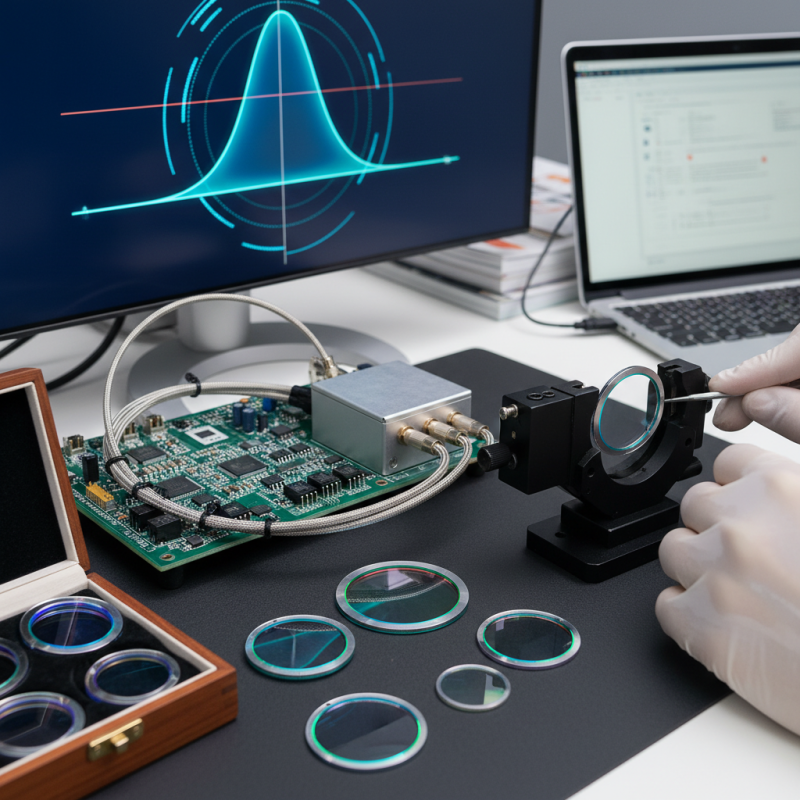
Understanding Bandpass Filters: Definition and Functionality
Understanding bandpass filters is crucial for engineers and technicians. These filters allow signals within a specific frequency range to pass while attenuating others outside this band. They play a vital role in various applications, especially in audio and radio frequency technologies. By focusing on specific frequency ranges, users can enhance signal clarity and minimize noise.
When choosing the right bandpass filter, it’s essential to understand your requirements. Consider the frequency range you want to isolate. Accuracy in specifying the lower and upper frequency limits is key. Additionally, evaluate the filter's quality factor, or Q-factor. A higher Q-factor indicates a narrower bandwidth and better performance for specific applications.
Also, be aware of the filter type: active or passive. Active filters require power and offer higher gain, while passive filters are simpler and more reliable. Your choice depends on the application and system requirements. Understanding these nuances can help improve your design outcomes significantly. Always test the filter in real-world conditions to ensure it meets your expectations. This reflection on your choices will lead to better results.
Top 10 Tips for Choosing the Right Bandpass Filters
| Tip Number | Tip | Description |
| 1 | Define Application Needs | Understand the specific requirements of your application to choose the appropriate filter characteristics. |
| 2 | Consider Frequency Range | Ensure the filter supports the required passband frequencies relevant to your signals. |
| 3 | Evaluate Insertion Loss | Check the amount of signal loss in the passband to ensure system performance is maintained. |
| 4 | Assess Filter Type | Different types exist; choose between passive and active filters based on your application. |
| 5 | Check Power Handling Capacity | Ensure the filter can handle the maximum power of the signals to avoid distortion or damage. |
| 6 | Assess Size and Form Factor | Choose a filter that fits conveniently within your system's design constraints. |
| 7 | Review Temperature Stability | Ensure filter performance is stable across the temperature range of your application. |
| 8 | Examine Group Delay Characteristics | Choose filters with low group delay to minimize phase distortion for high-frequency signals. |
| 9 | Check for Customization Options | Look for filters that can be tailored to your specific application requirements if off-the-shelf options are not satisfactory. |
| 10 | Consult with Experts | When in doubt, consult with vendors or engineers experienced in your specific application area. |
Key Characteristics to Consider When Selecting Bandpass Filters
When selecting bandpass filters, several key characteristics should guide your decision. First, consider the center frequency. This is crucial for ensuring that the filter matches your application. It defines the band of frequencies that can pass through. If this frequency is miscalculated, it can lead to significant losses in performance.
Another important aspect is the bandwidth. This refers to the range of frequencies that the filter allows. A narrower bandwidth may be necessary for precise filtering, while a wider range can be beneficial in other situations. However, too broad a bandwidth might allow unwanted signals, which can interfere with your main signal.
Finally, evaluate the filter's insertion loss. This reflects how much signal is lost during the filtering process. Ideally, you want minimal loss. In some cases, you may have to balance loss with other characteristics, such as size or cost. Each application is unique, and the right choice often requires some compromise. Strive for an optimal fit, but be ready to adapt as needed for achieving the best results.
Evaluating Frequency Range and Bandwidth Requirements
When selecting bandpass filters, evaluating frequency range and bandwidth is crucial. These filters allow specific frequencies to pass through while blocking others. Understanding your application's frequency requirements helps in making the right choice. For example, in audio applications, a narrow bandwidth may suit voice signals, while wider bandwidth is ideal for music.
Consider the center frequency as well. It determines the filter's effectiveness. Selecting a filter far from the desired frequency can lead to poor performance. Additionally, bandwidth should match the signal characteristics. Too wide a bandwidth can introduce noise and distort the signal quality. Balancing these factors requires attention to detail and sometimes involves trade-offs.
In practice, engineers often face challenges in estimating these requirements accurately. Overly optimistic expectations can lead to mismatched filters that do not perform as intended. Collecting data from past projects can inform decisions. Confidence is built on experiences, yet every project can reveal unique obstacles. Trust instincts, but remain open to adjustments. Each filter choice is a step toward refining your design, but it may require patience and experimentation.
Top 10 Tips for Choosing the Right Bandpass Filters
This bar chart illustrates various characteristics to consider when choosing the right bandpass filters. The metrics include frequency range, bandwidth, insertion loss, power handling, impedance, temperature range, size, cost, quality factor, and material. Each characteristic is represented numerically, providing a quick reference for evaluation criteria.
Assessing Insertion Loss and Filter Shape Factors
When assessing bandpass filters, insertion loss is a critical parameter. Insertion loss measures the reduction in signal power resulting from the filter's presence. Studies indicate that a well-designed filter can achieve an insertion loss as low as 0.5 dB. In contrast, poorly designed filters may present losses well above 3 dB. This difference can significantly impact system performance, particularly in high-frequency applications. It’s essential to evaluate insertion loss alongside the filter’s passband to ensure efficiency and signal integrity.
Another key aspect is the filter shape factor. The shape factor describes the steepness of a filter's roll-off, influencing how effectively it rejects unwanted frequencies. A narrow shape factor can lead to better selectivity but may complicate design and increase cost. Reports suggest that for RF applications, a shape factor of 2:1 is often optimal. This allows adequate control over the passband while maintaining an acceptable level of complexity. Balancing these aspects is crucial yet challenging for engineers. It requires careful consideration of design requirements and operational goals.
Material and Design Considerations in Bandpass Filter Selection
When selecting bandpass filters, material and design play crucial roles in performance. The choice of materials affects the filter's durability and efficiency. For instance, ceramics and metals offer different benefits. Ceramic filters are lightweight and have excellent thermal stability. However, they may not handle high power as effectively as metal options. This trade-off can impact the overall functionality in specific applications.
The design of a bandpass filter also influences its effectiveness. Factors like the filter shape and size must be considered. A compact design can lead to space-saving solutions, yet it might limit frequency range. Additionally, the layout impacts signal loss. Complex designs may perform better, but they can complicate manufacturing and increase costs.
Balancing these aspects requires thorough analysis. A filter that meets basic requirements might not excel in all scenarios. Testing is essential to confirm performance. Users must reflect on their specific needs and adapt choices accordingly. Poor material selection or design flaws can lead to inefficiencies that affect entire systems. Assessing both matters deeply prevents future regrets.