How to Choose the Best Renewable Energy Storage Solutions?
In an era of growing environmental awareness, the importance of renewable energy storage solutions cannot be overstated. As we transition to greener energy sources, effective storage becomes crucial. These solutions enable us to store energy generated from sources like solar and wind. However, choosing the right system can be challenging.
Understanding various storage technologies is essential. Battery systems, pumped hydro, and thermal storage each have unique advantages and limitations. The right choice often depends on specific energy needs, location, and budget. Many people may overlook these factors, leading to suboptimal decisions.
As renewable energy systems become more prevalent, the quest for efficiency intensifies. Evaluating reliability and performance is vital in this rapidly evolving field. Each solution carries its pros and cons, prompting us to reflect on our energy choices. Selecting the best renewable energy storage solutions is not merely about technology. It requires a thoughtful consideration of future energy needs and environmental impacts.
Understanding Renewable Energy Storage: Key Concepts and Importance
Renewable energy storage is crucial for a sustainable energy future. It helps manage the intermittent nature of renewable sources like solar and wind. Energy storage systems balance supply and demand, ensuring a steady power flow despite fluctuations. This regulation is especially important during peak usage times.
Understanding different storage technologies is essential. Battery systems, for example, vary widely in chemistry and efficiency. Some may offer high discharge rates but shorter lifespans, making them less ideal for long-term storage. Pumped hydro storage, while effective, relies heavily on geographical conditions and can impact local ecosystems.
Challenges in energy storage often arise from cost and scalability. Investing in research is vital for improving technologies. Continued innovation can lead to solutions that meet energy needs effectively. Balancing performance, cost, and environmental impact requires careful consideration. Engaging with experts helps identify the best options for every situation, but not every choice will suit all contexts.
Types of Renewable Energy Storage Systems: An Overview
When choosing renewable energy storage systems, understanding the types available is essential. One prevalent solution is lithium-ion batteries. They are favored for their efficiency and speed. According to the International Energy Agency (IEA), the global demand for lithium-ion batteries is expected to grow by over 20% annually through 2030. This reflects their pivotal role in energy transition.
Another option is pumped hydro storage (PHS). It accounts for about 94% of global energy storage capacity, according to the U.S. Department of Energy. PHS systems are highly efficient, with round-trip efficiencies exceeding 80%. However, they require specific geographical conditions, which limits their applicability.
Moreover, flow batteries are emerging as a sustainable alternative. They provide scalability and flexibility. Their long lifespan and lower degradation make them suitable for long-term storage. Studies suggest that flow batteries could become key players in supporting renewable integration in the next decade. Yet, challenges remain in cost and efficiency. Understanding these intricacies is vital in making informed decisions.
Types of Renewable Energy Storage Systems
Factors to Consider When Selecting Energy Storage Solutions
When selecting renewable energy storage solutions, various factors come into play. The capacity to store energy is crucial. Different technologies, such as lithium-ion batteries and pumped hydro storage, offer distinct capacities. For instance, lithium-ion batteries can store energy for short durations, while pumped hydro is more suitable for long-term storage. According to the U.S. Department of Energy, the global energy storage market is expected to reach 1,095 GWh by 2030, driven by growing renewable energy adoption.
Efficiency is another vital aspect. Energy losses occur during storage and retrieval. On average, lithium-ion batteries have a round-trip efficiency of 85-90%. In contrast, pumped hydro systems often operate at around 75-85% efficiency. This may seem acceptable, but the losses can become significant at larger scales. Understanding these nuances is key to making informed decisions.
Lastly, costs play a major role. Initial investment might be high for some technologies. However, the total cost of ownership should be considered, including maintenance and operational costs. A study by Lazard shows that the levelized cost of storage can vary widely, from $100 to $200 per MWh. This variability makes it vital to analyze individual project needs and conditions thoroughly, ensuring the chosen solution aligns with long-term objectives.
Evaluating Performance and Efficiency of Storage Technologies
When assessing renewable energy storage solutions, performance and efficiency are critical. Various technologies offer different capabilities, impacting their suitability for diverse applications. According to a recent DOE report, lithium-ion batteries are leading in energy density, with up to 250 Wh/kg. However, they usually come with a limited lifespan of around 2,000 cycles. This highlights a significant trade-off between immediate energy storage efficiency and long-term usability.
In contrast, pumped hydro storage remains a dominant player, providing about 95% round-trip efficiency. Its scale can manage large amounts of energy, but it requires specific geographical conditions. The installation of such systems can take several years. Additionally, emerging technologies like solid-state batteries promise higher safety and durability, yet their commercial viability is still under evaluation. The industry's rapid development means some innovations are not fully mature, presenting opportunities for improvement.
Evaluating these technologies requires a nuanced approach. Factors such as initial costs, environmental impact, and facility constraints must be considered. Experts note that the fastest solution could lead to suboptimal choices if long-term efficiency is overlooked. Stakeholders must weigh immediate benefits against future demands to make informed decisions.
Future Trends in Renewable Energy Storage Solutions and Innovations
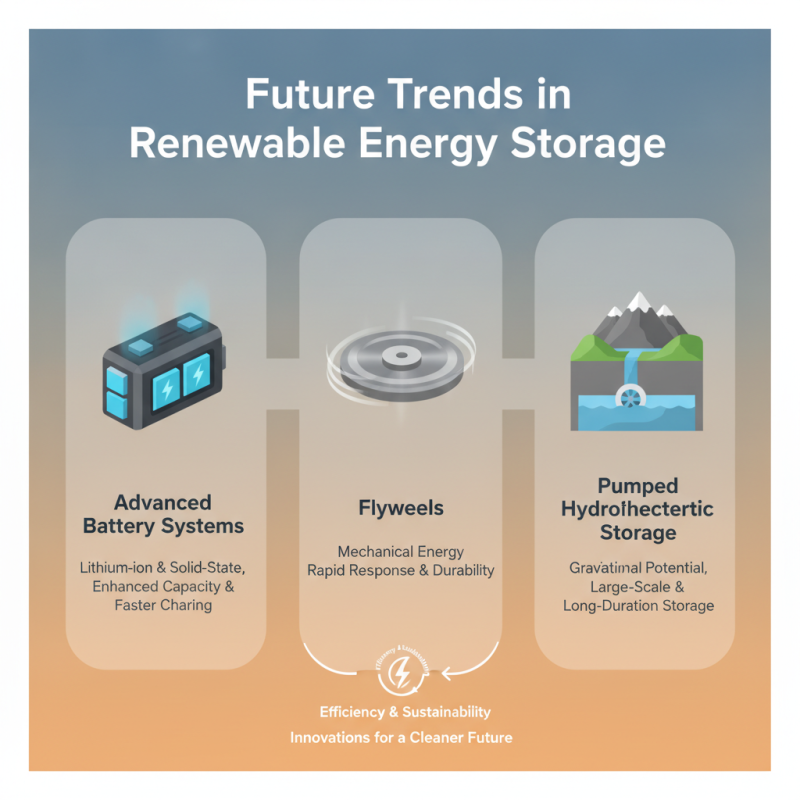
The landscape of renewable energy storage is rapidly evolving. Innovations are emerging to address the growing demand for efficient energy solutions. New technologies include advanced battery systems, flywheels, and pumped hydroelectric storage. These innovations promise enhanced capacity, efficiency, and sustainability.
One trend is the increasing use of solid-state batteries. They offer higher energy density and improved safety compared to traditional lithium-ion batteries. The integration of artificial intelligence in energy management systems is also on the rise. AI can optimize energy flow and enhance grid stability. However, challenges like high production costs still need attention.
Tips: Explore community energy storage options. Local initiatives can bolster resilience. Keep an eye on emerging tech like hydrogen storage. It shows promise in long-term energy solutions. Stay informed about research breakthroughs; they can signal shifts in the market.