
What Are Chinas Best New Solar Energy Solutions?
China’s solar sector is developing rapidly, but “best” depends on location, budget, climate, and grid access. This article examines new solar energy solutions through practical performance rather than marketing claims. It considers how these technologies work on factory roofs, rural land, apartment buildings, and large desert projects.
Modern Chinese manufacturers are improving TOPCon and heterojunction modules, which can produce more electricity from limited space. Some products perform better in high temperatures and low-light conditions. Bifacial panels can capture reflected sunlight from pale ground surfaces. Building-integrated photovoltaics may turn glass façades and roof tiles into power-generating surfaces. Meanwhile, agrivoltaic systems place panels above crops, creating partial shade for selected plants. Results vary.
Energy storage is also changing the picture. Lithium iron phosphate batteries can support evening demand and reduce pressure on local grids. Smart inverters, digital monitoring, and microgrids help factories manage unstable renewable output. Perovskite-silicon tandem cells appear highly promising, yet long-term field evidence remains limited. That matters. Laboratory efficiency is not the same as twenty-five years of reliable service.
A credible evaluation should compare verified efficiency, temperature coefficients, degradation rates, warranty terms, fire safety, recycling plans, and independent certifications. Project owners should also examine installation quality and after-sales support. A cheaper panel may cost more after repeated repairs. Some forecasts sound too confident, especially when they ignore supply-chain risks or changing regulations. China offers impressive choices, but careful testing, transparent data, and local engineering judgment remain essential before calling any solution the best.
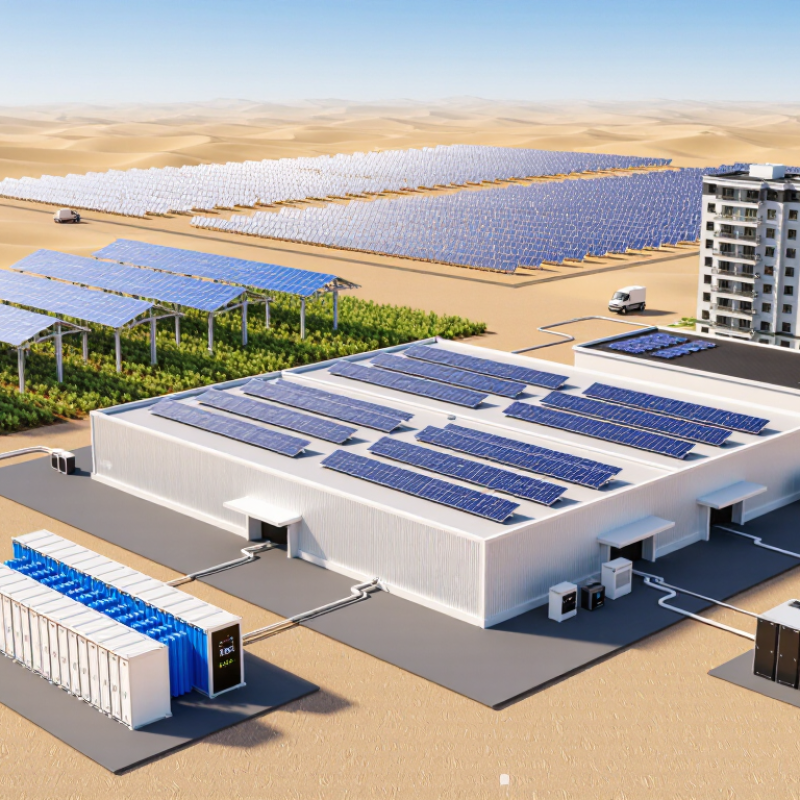
China’s Emerging Solar Energy Technologies and Their Core Features
What Are China’s Best New Solar Energy Solutions?
China’s emerging solar sector is moving beyond standard rooftop panels. Perovskite-silicon tandem cells are gaining attention because they can capture more sunlight from the same surface. Laboratory results look impressive, but long-term outdoor reliability still needs stronger evidence. Heat, humidity, and ultraviolet exposure remain serious testing conditions. A promising prototype is not yet a dependable power plant.
Flexible solar modules offer another practical direction. Their lighter structure can fit curved roofs, transport facilities, and temporary buildings. Building-integrated photovoltaics can replace parts of glass façades or roofing materials. In field projects, careful structural checks matter as much as conversion efficiency. Small installation errors may create leaks, glare, or difficult maintenance. That detail is easy to overlook.
Floating solar systems use reservoirs and industrial ponds where land is limited. Cooler water can help panels maintain output, although wind, corrosion, and ecological effects require monitoring. Agrivoltaic projects place elevated modules above crops, balancing electricity generation with shade and irrigation needs. Results differ by crop and local climate. There is no universal design. Smart inverters, digital monitoring, and coordinated battery storage can reduce grid pressure during peak demand. Yet software predictions can fail during unusual weather, so operators still need experienced technicians and transparent performance records.
| Solar Solution | Typical Commercial Efficiency | Core Technical Feature | Main Advantages | Key Limitations | Typical Service-Life Target | Development Status | Best-Fit Applications |
|---|---|---|---|---|---|---|---|
| N-Type TOPCon Silicon Modules | Approximately 22%–24.5% module efficiency | Uses a passivated contact structure on n-type crystalline silicon cells to reduce recombination losses. | High efficiency, lower light-induced degradation than many older p-type designs, good temperature performance, and compatibility with high-volume manufacturing. | Requires more advanced process control than conventional PERC technology; performance depends on wafer quality and metallization design. | Generally designed for 25–30 years of operation | Commercial and rapidly expanding | Utility-scale plants, commercial rooftops, industrial facilities, and high-output residential systems |
| Heterojunction Silicon Modules | Approximately 22%–24.5% module efficiency | Combines crystalline silicon with thin amorphous-silicon passivation layers on both sides of the cell. | Strong temperature coefficient, high bifacial potential, low degradation, and efficient performance in hot climates. | Uses relatively costly materials and low-temperature manufacturing steps; production complexity can increase capital requirements. | Generally designed for 30 years or more | Commercial | Hot regions, large solar parks, elevated installations, and projects requiring long-term energy yield |
| Back-Contact Silicon Modules | Approximately 22.5%–25% module efficiency | Moves most or all electrical contacts to the rear of the cell, leaving the front surface unobstructed. | High power density, improved light capture, attractive appearance, and strong performance where roof space is limited. | More demanding cell interconnection and manufacturing processes; reliability depends on precise rear-side architecture. | Generally designed for 25–30 years | Commercial and scaling | Space-constrained rooftops, premium residential systems, commercial buildings, and high-power modules |
| Perovskite–Silicon Tandem Cells | Commercial products are still developing; research devices have exceeded 28% efficiency | Places a perovskite top cell over a silicon bottom cell so that different parts of the solar spectrum are absorbed more efficiently. | Potential for higher efficiency than single-junction silicon, lower semiconductor material use, and strong long-term power-density potential. | Long-term stability, large-area uniformity, encapsulation, lead-management requirements, and manufacturing scale remain important challenges. | Commercial lifetime targets are still being established | Pilot and pre-commercial | Future high-efficiency rooftops, land-constrained projects, and applications where maximum output per area is critical |
| Bifacial Solar Modules | Front-side efficiency commonly around 21%–24%; energy gain depends on site conditions | Generates electricity from both the front and rear surfaces by collecting reflected and diffuse light. | Can increase annual energy yield, works well with reflective ground surfaces, and is suitable for raised or widely spaced mounting systems. | Rear-side gain varies with albedo, row spacing, module height, shading, and ground conditions; accurate system modeling is necessary. | Generally designed for 25–30 years | Commercial | Utility-scale solar farms, desert sites, reflective rooftops, carports, and elevated structures |
| Thin-Film CIGS Modules | Approximately 13%–19% module efficiency | Uses a copper-indium-gallium-selenide semiconductor deposited on glass, metal, or flexible substrates. | Lightweight options, flexible form factors, good low-light behavior, and suitability for curved or weight-sensitive surfaces. | Usually lower efficiency than leading crystalline-silicon modules; production yield, material availability, and bankability can be significant considerations. | Often designed for 20–30 years, depending on construction | Commercial in selected applications | Lightweight rooftops, building-integrated photovoltaics, portable systems, and curved architectural surfaces |
| Thin-Film CdTe Modules | Approximately 18%–20.5% module efficiency | Uses cadmium telluride as the photovoltaic absorber in a thin-film structure. | Good performance at high operating temperatures, relatively low material usage, and stable energy production in some climates. | Requires strict material handling and recycling practices; tellurium availability and market supply may constrain expansion. | Generally designed for 25–30 years | Commercial | Large ground-mounted projects, hot climates, and sites where temperature performance is important |
| Floating Solar Photovoltaics | Uses the efficiency of the selected module technology | Mounts photovoltaic modules on buoyant platforms installed on reservoirs, water-treatment ponds, or other calm water bodies. | Reduces competition for land, may limit water evaporation, and can benefit from cooler operating conditions above water. | Anchoring, wind and wave loading, corrosion, water ecology, maintenance access, and electrical safety require specialized design. | Project-specific; commonly planned for 20–30 years | Commercial and expanding | Reservoirs, industrial ponds, irrigation facilities, and water infrastructure with suitable environmental conditions |
| Agrivoltaic Solar Systems | Uses the efficiency of the selected module technology | Combines solar generation with agricultural production through elevated, spaced, or semi-transparent module arrangements. | Improves land-use efficiency, can reduce crop heat stress and evaporation in suitable climates, and creates diversified project value. | Crop response is site-specific; shading, machinery access, structural cost, and farming practices must be carefully coordinated. | Project-specific; commonly planned for 25–30 years | Demonstrated and site-dependent | Farms, orchards, grazing areas, greenhouses, and regions with high land-use pressure |
| Solar Modules Integrated with Battery Storage and Smart Inverters | Depends on the selected photovoltaic module and system architecture | Combines photovoltaic generation with power electronics, energy storage, forecasting, and grid-management software. | Improves self-consumption, supports peak shifting, provides backup capability, and helps manage variable solar output. | Adds capital cost, thermal-management requirements, battery degradation, fire-safety considerations, and control-system complexity. | Modules: generally 25–30 years; batteries: commonly 8–15 years, depending on chemistry and usage | Commercial and rapidly improving | Homes, commercial buildings, microgrids, remote power systems, and renewable-heavy electricity networks |
Related Posts
-

China Top Solar Solutions Manufacturers for Global Buyers?
-
Exploring China Best Power Solar Solutions for Sustainable Energy?
-
China Top 10 Solar Solutions Suppliers for Global Buyers
-
How to Choose the Best Solar Panels Solutions for Your Home?
-
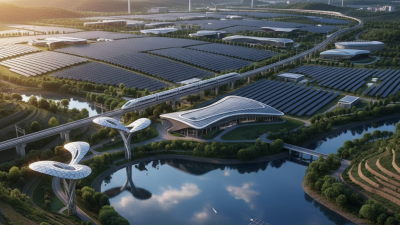
China Top 10 Reliable Solar Solutions for Sustainable Energy?
-

Why Power Solar Solutions Are Essential for Sustainable Energy Transition?
CORPORATE HEADQUARTERS
North America
California
AGIC Energy North America LLC
13025 Danielson Street, Suite 105
Poway, CA 92064 – USA
Phone Number: +1 (858) 842 1513
Email: info@site_cc52bd27-560c-4f9d-bd66-63718fc42539
Sales: sales@site_cc52bd27-560c-4f9d-bd66-63718fc42539