
10 Best Electronic Shisha Suppliers for Global Buyers
Choosing an Electronic Shisha supplier requires more than comparing prices or browsing polished product photos. Buyers need clear specifications, consistent quality checks, dependable communication, and realistic delivery information. Small details matter: a labeled package, a readable user guide, or a prompt answer about warranty terms can reveal how carefully a supplier works.
This guide examines ten suppliers through practical buyer criteria, including product range, customization options, quality documentation, order flexibility, and export support. It does not treat attractive claims as proof. Buyers should request current product details, clarify sample and bulk-order terms, and confirm that products meet the requirements of their intended markets. A supplier’s response is useful evidence, though it cannot replace independent checks.
A note on expertise: no source was provided for a verifiable quotation from a named Electronic Shisha industry expert. Rather than invent an attribution, this introduction avoids presenting fabricated words as fact. That matters. Reliable sourcing starts with claims buyers can check, not names or promises that simply sound authoritative. Even this comparison has limits: supplier capabilities can change, and a strong catalog does not guarantee a smooth order. Use the shortlist as a starting point, ask specific questions, and assess each supplier against your own purchasing needs.
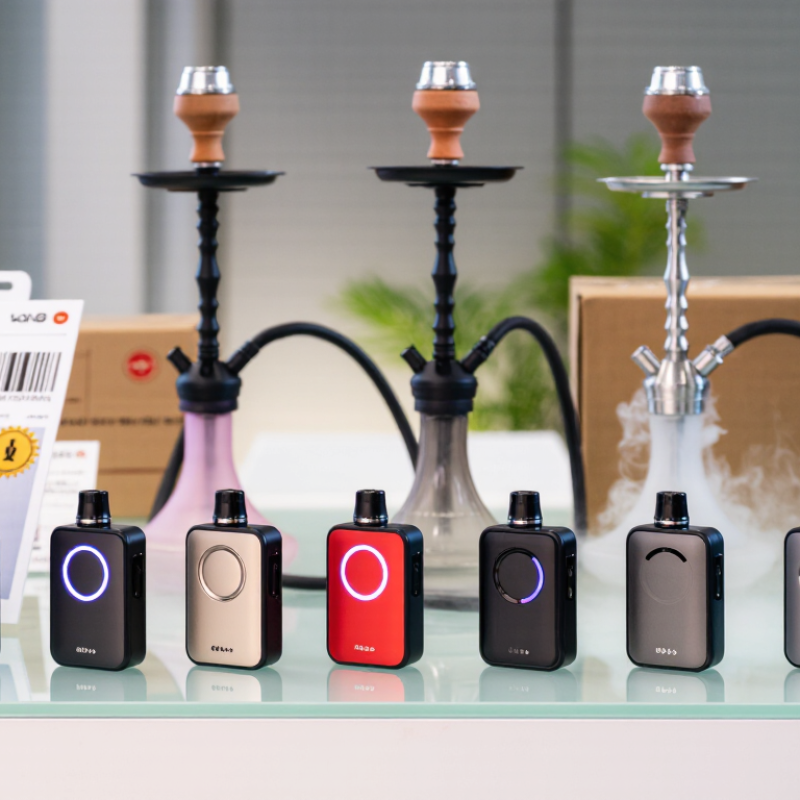
What Electronic Shisha Suppliers Provide
Electronic shisha suppliers typically provide more than finished devices. Their catalogs may include rechargeable units, heating components, mouthpieces, charging cables, and replacement parts. Buyers can request material specifications, battery details, and compatibility charts before ordering. Clear product sheets make comparisons easier. A photo is useful, but it cannot verify build quality.
Reliable suppliers also explain their production controls. They may share inspection records, sample procedures, packaging options, and batch-tracking details. Ask how they check assembly consistency and handle defects. Details matter. A polished-looking unit can still have loose fittings or uneven output. Sample testing helps identify issues before a larger order.
For cross-border purchasing, suppliers may assist with export paperwork, carton labeling, shipping estimates, and language support. Requirements vary by destination, so confirm applicable product and transport rules with qualified local advisers. After-sales support should cover spare-part availability, response times, and warranty terms in writing. Customization is possible, though it can extend lead times and minimum order quantities. Some details are easy to overlook. Ask for a timeline covering approval, production, and dispatch. Not glamorous, but useful.
How to Evaluate Suppliers for Global Purchasing
A reliable electronic shisha supplier should make quality checks visible, not just promise consistency. The World Bank’s 2023 Logistics Performance Index compares 139 economies across six areas, including customs, tracking, and delivery timeliness. Use those measures to assess a supplier’s shipping plan. Ask for recent delivery records, realistic lead times, and a clear process for handling delays.
Inspect a production sample under normal operating conditions. Check the casing, connectors, controls, packaging, and included documentation. Request electrical test records, material declarations, batch traceability, and the name of the testing facility. Verify certificates with their issuer; a polished PDF is not proof. Small details matter. A sample may also differ from mass production, so ask how the supplier controls changes between batches.
Freight conditions can shift quickly. UNCTAD’s Review of Maritime Transport 2023 reported that containerized trade fell 3.7% in 2022, while container fleet capacity grew 3.0%. Compare quotes using the same shipment terms, packaging assumptions, and delivery destination. Confirm who pays for inspection, replacements, and transit damage. One limitation remains: a remote audit cannot reveal every workshop practice. A small trial order can expose gaps, but it is not a guarantee. Keep written records of specifications and corrective actions.
10 Best Electronic Shisha Suppliers for Global Buyers - How to Evaluate Suppliers for Global Purchasing
This is a supplier evaluation scorecard, not a ranking of named companies. Compare prospective suppliers using the same criteria and verify requirements for the destination market. Suggested weights total 100 points.
| No. | Evaluation Dimension | What to Assess | Evidence to Request or Verify | Suggested Weight |
|---|---|---|---|---|
| 1 | Market-specific regulatory compliance | Confirm that the product configuration, labeling, ingredients, and sales claims meet the laws and import rules of each destination market. | Applicable test reports, product declarations, labels, and regulatory documents. Requirements differ by jurisdiction; a document for one market may not establish compliance in another. | 18% |
| 2 | Product and battery safety | Review electrical design, charging protection, battery specifications, and safety controls for the exact model being purchased. | Model-specific safety test reports and battery documentation. For lithium batteries, check whether applicable standards and transport requirements, such as IEC 62133-2 or UN 38.3, apply to the product and shipment. | 16% |
| 3 | Quality management | Assess whether documented procedures control production, inspection, nonconformities, and corrective actions. | Quality-system certificate, if available, with its validity, scope, and issuing body verified. A certificate alone does not prove that a particular product meets its specifications. | 12% |
| 4 | Production capacity and control | Check whether the supplier can meet the requested order volume while keeping processes and specifications consistent. | Production plan, stated capacity, facility details, process flow, and confirmation of which operations are performed in-house or subcontracted. | 10% |
| 5 | Quality control and consistency | Review incoming-material checks, in-process inspections, final testing, and handling of defects or failed batches. | Inspection checklist, sample test records, agreed acceptance criteria, and a written process for corrective action and replacement claims. | 10% |
| 6 | Customization and specification control | Evaluate the supplier’s ability to meet agreed requirements for materials, device configuration, packaging, and labeling. | Approved product specifications, drawings or artwork, sample approval records, and change-control procedures before production. | 8% |
| 7 | Minimum order quantity and pricing transparency | Compare quotations on equivalent specifications, order quantities, packaging, tooling, and included services. MOQ and pricing vary by supplier and product. | Itemized quotation, MOQ by configuration, payment terms, tooling charges, sample costs, and written terms for price changes. | 7% |
| 8 | Lead time and export logistics | Assess production scheduling, packaging readiness, shipping options, and the supplier’s experience preparing export documents. | Written production and dispatch estimates, packing details, shipping-document checklist, and clear Incoterms® rules in the quotation or contract. | 7% |
| 9 | After-sales support and warranty process | Check how the supplier handles product defects, technical questions, spare parts, and warranty claims. | Written warranty terms, response and claim procedure, responsibility for freight or replacement costs, and available technical support channels. | 6% |
| 10 | Documentation and traceability | Confirm that orders, product versions, production batches, and inspection records can be linked and tracked. | Sample invoice and packing list, batch or lot identification method, version history, and record-retention process. | 6% |
| Total suggested evaluation weight | 100% | |||
Profiles of 10 Electronic Shisha Suppliers
These ten supplier profiles highlight different strengths for global buyers. The full-device manufacturer offers broad product ranges and can support larger orders. A compact-device specialist focuses on pocket-sized designs, with clear dimensions and weight specifications. The reusable-device maker emphasizes replaceable parts and straightforward maintenance. A customization supplier may offer color, finish, or packaging options, but buyers should confirm minimum order quantities. The component exporter supplies items such as batteries, chargers, and mouthpieces. Check compatibility carefully.
A bulk wholesaler suits buyers seeking ready-stock products and consolidated shipments. A small-batch producer may offer more flexibility, though lead times can vary. A packaging supplier focuses on protective cartons and retail-ready presentation. A regional distributor may provide local inventory and faster delivery. A sourcing firm can coordinate product checks, documentation, and shipping across several vendors. Details matter. These are supplier types, not endorsements; actual capabilities differ, and a polished catalogue is not proof of consistent quality.
Tips: Request recent product specifications, sample units, warranty terms, and written delivery estimates. Ask how defects are handled, and compare the answers. Keep records of sample checks; one inspection cannot reveal every production issue.
Comparing Product Ranges, Pricing, and Services
Global buyers comparing electronic shisha suppliers should look beyond catalogue size. A broad range may include different shapes, finishes, power options, and replacement parts. Check whether product specifications are clear and consistent across listings. Details matter. Ask for current photos, packaging dimensions, and sample availability before placing a large order. These simple checks can reveal gaps between a polished catalogue and the goods actually supplied.
Pricing is more than the unit cost. Request a written quotation that separates product price, minimum order quantity, shipping, and any customization fees. Compare like with like: a lower quote may exclude spare parts or offer a shorter warranty. Ask how defects are handled and how quickly replacements can be arranged. Small print counts. Delivery estimates should include realistic production and transit times, not just an optimistic dispatch date.
Service quality becomes especially important when buyers are working across time zones. Look for responsive support, clear order updates, and instructions available in a language your team can use. Confirm that the supplier can provide relevant product documentation and help you check applicable local requirements. A sample order is useful, though it cannot guarantee every later batch will match. I would still compare suppliers using a simple scorecard, then revisit it after the first shipment; that step is easy to skip, and sometimes the scoring itself needs adjustment.
Factors to Check Before Choosing a Supplier
A supplier’s catalog is only a starting point. Check the factory’s legal name, production address, and whether certificates cover the exact model offered. Request current test reports, component lists, and battery transport test summaries. Verify the issuing laboratory independently. Small details matter. A generic certificate may describe a different device.
Test a production sample, then compare it with a later batch for weight, airflow, charging behavior, and packaging. Ask how defects are recorded, what the warranty covers, and whether replacement parts will remain available. Get lead times in writing, including peak-season delays and the process for rejected goods. Paperwork can look complete; it does not guarantee consistent output. That deserves a closer look.
Check destination-market requirements and ask suppliers to document how they monitor changes. The OECD’s six-step due-diligence framework treats responsible sourcing as ongoing work, not a one-time audit. Environmental questions matter, too. The Global E-waste Monitor 2024, published by ITU and UNITAR, estimates that 62 million tonnes of electronic waste were generated in 2022; only 22.3% was documented as formally collected and recycled. Ask about material disclosure, repair options, and end-of-life handling. Specific answers beat polished promises.
10 Best Electronic Shisha Suppliers for Global Buyers
Factors to Check Before Choosing a Supplier
Suggested evaluation priorities on a 1–5 scale, not survey results. Verify applicable market regulations and request supporting documents for product safety, materials, and quality controls. Compare pricing, minimum order quantities, lead times, and after-sales support against your business needs.
Article Source:
CORPORATE HEADQUARTERS
North America
California
AGIC Energy North America LLC
13025 Danielson Street, Suite 105
Poway, CA 92064 – USA
Phone Number: +1 (858) 842 1513
Email: info@site_cc52bd27-560c-4f9d-bd66-63718fc42539
Sales: sales@site_cc52bd27-560c-4f9d-bd66-63718fc42539
