
+1 (858) 842-1249 

info@site_cc52bd27-560c-4f9d-bd66-63718fc42539 

sales@site_cc52bd27-560c-4f9d-bd66-63718fc42539

2026 Best China DC EV Chargers for Global Buyers

Choosing a China Dc Ev Charger in 2026 requires more than comparing power ratings and factory prices. Global buyers must examine safety, software, certification, service, and long-term operating costs. A charger may advertise 240 kW output, yet deliver less power under heat, poor grid conditions, or heavy daily use. That difference matters at a busy highway station.

This guide introduces reliable Chinese DC charger options for international projects. It considers practical evidence from manufacturer documentation, factory quality controls, product samples, and installation feedback. Key review points include IEC 61851 compliance, relevant regional certifications, OCPP support, payment integration, thermal management, ingress protection, and emergency stop design. Certification requirements vary by destination, so buyers should confirm them with local authorities and qualified testing bodies. A certificate alone is not proof of excellent field performance.

Real-world details deserve attention. Look for clear wiring diagrams, accessible filters, replaceable charging cables, and spare parts support. Ask how quickly a supplier responds to a failed power module. Request test records, warranty terms, software update policies, and references from similar climates. Some specifications look impressive on paper. They may not reflect stable performance after three summers of outdoor operation.

No supplier is perfect. Even experienced manufacturers can provide unclear documents or delayed technical answers. That should prompt careful questions, not immediate rejection. The best choice combines verified engineering, transparent communication, realistic pricing, and dependable after-sales support. This overview helps procurement teams compare China-made DC chargers with greater confidence, while recognizing the risks that still require independent verification.
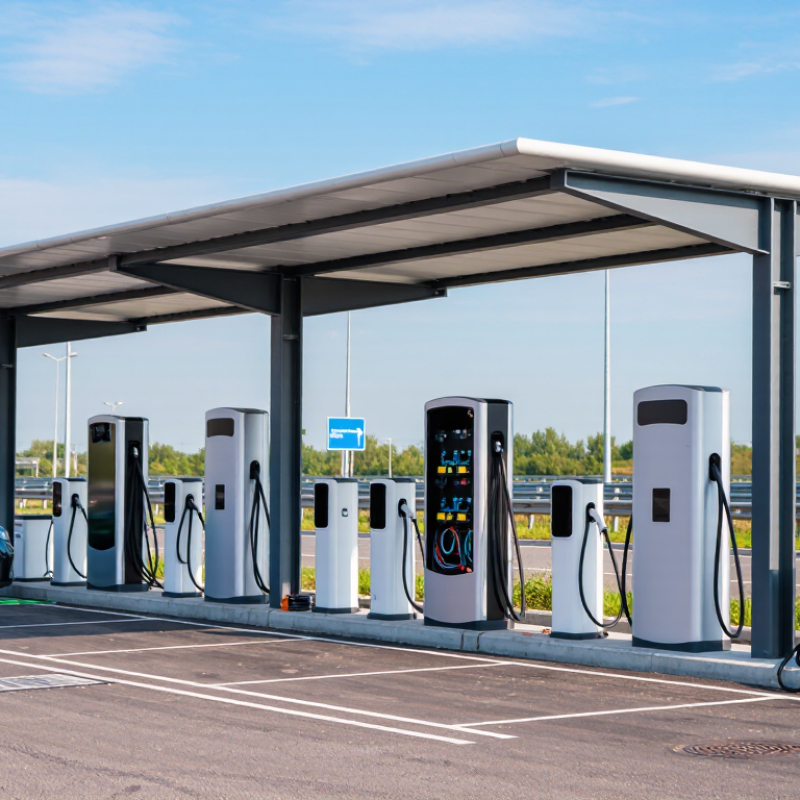
2026 Best China DC EV Chargers for Global Buyers

Define China DC EV Chargers by IEC 61851 Power Classes and 2026 Use Cases

China DC EV chargers for 2026 should be defined through IEC 61851 compliance, not marketing wattage alone. IEC 61851-23 and IEC 61851-24 cover DC supply equipment, safety, and communication. They do not create a single official power ladder. For procurement, global buyers commonly group units into 50–149 kW, 150–349 kW, and 350 kW-plus classes. The IEA’s Global EV Outlook 2025 reports more than five million public charging points worldwide in 2024, increasing pressure for reliable DC deployment.

The 50–149 kW class fits urban sites, hotels, and mixed-use parking. A 120 kW cabinet may serve two vehicles, but output can fall when both charge simultaneously. The 150–349 kW class suits highways, retail hubs, and logistics depots. It needs stronger transformers, liquid-cooled cables, and careful thermal management. Above 350 kW, charging can support buses and high-mileage fleets, yet vehicle acceptance remains the limiting factor. Bigger is not always faster.

The U.S. Department of Energy’s Alternative Fuels Data Center identifies DC fast charging as a broad range, often from 50 kW upward. That range shows why buyers should compare measured efficiency, connector compatibility, uptime, and communication performance. I would also question impressive peak ratings. They may describe seconds, not a full session. For 2026 projects, request IEC test evidence, local grid studies, cybersecurity documentation, and service records before comparing China-made equipment on price alone.

Compare 60–480 kW Charging Outputs, Connectors, and Global Standards

For global buyers, China DC EV chargers now cover outputs from 60 to 480 kW. A 60 kW unit suits workplaces, hotels, and smaller public sites. It usually places less pressure on the local grid. At 120 or 180 kW, drivers receive faster service, but cable cooling and transformer capacity become more important. A 240 kW charger can support busy corridors. The 480 kW class targets high-utilization fleets and highway hubs. It is not automatically the best choice.

I have seen project plans fail because power ratings looked impressive on paper. Real charging speed depends on the vehicle, battery temperature, cabinet sharing, and site power. Air-cooled cables may work at moderate outputs. Liquid-cooled cables are more suitable for sustained high-current charging. Small details matter, including cable length, screen visibility, emergency stops, and protection against rain and dust.

Connector selection must match the destination market. CCS2 is common across Europe and many other regions, while CCS1 remains widely used in North America. GB/T is important for vehicles and infrastructure serving China. CHAdeMO still appears in some existing fleets, though new installations may require careful demand analysis. Buyers should verify IEC 62196 and IEC 61851 alignment, local electrical approvals, and communication support such as ISO 15118. Plug-and-charge capability can improve usability, but compatibility is not always perfect. Test it with real vehicles before ordering large quantities.

2026 Best China DC EV Chargers for Global Buyers - Compare 60–480 kW Charging Outputs, Connectors, and Global Standards
Nominal DC Output Typical DC Voltage Range Typical Maximum Current Recommended Connector Configurations Applicable Charging and Communication Standards Typical Charging Scenario Cooling and Cable Considerations Global Buyer Checklist
60 kW 200–1000 V DC Up to approximately 300 A, depending on voltage and design CCS2 CCS1 GB/T DC CHAdeMO* IEC 61851-1 and IEC 61851-23; IEC 62196 for compatible connector systems; DIN 70121 or ISO 15118 where supported; OCPP 1.6J or OCPP 2.0.1 for network management Urban fast charging, workplaces, dealerships, retail sites, and highway locations with moderate traffic Air-cooled cable is commonly sufficient. Cable length, connector temperature monitoring, and vehicle-side voltage compatibility should be checked. Confirm local grid capacity, residual-current protection, regional connector requirements, payment method, language support, and certification requirements.
120 kW 200–1000 V DC Up to approximately 600 A on selected high-current designs; many systems operate below this level CCS2 CCS1 GB/T DC CHAdeMO* IEC 61851; IEC 62196; DIN 70121 and/or ISO 15118 for vehicle communication; OCPP 1.6J or OCPP 2.0.1 for charger management Public fast-charging hubs, fleet depots, commercial parking areas, and corridor charging Air-cooled cable systems are widely used. Dynamic power sharing can allow two vehicles to charge from one power cabinet. Check whether the stated output is per connector or shared between connectors. Verify three-phase input voltage, harmonics, surge protection, and local grid approval.
180 kW 200–1000 V DC Up to approximately 600 A, subject to connector, cable, and thermal limits CCS2 CCS1 GB/T DC IEC 61851-1 and IEC 61851-23; IEC 62196; ISO 15118 where Plug and Charge or advanced communication is required; OCPP 2.0.1 or OCPP 1.6J High-turnover public charging, electric taxis, delivery fleets, and highway service areas Air cooling may be used at moderate current. Temperature sensors, cable derating, and automatic current control become increasingly important. Request independent verification of continuous output, low-voltage performance, efficiency, standby consumption, and protection against overvoltage and overtemperature.
240 kW 200–1000 V DC Up to approximately 600 A; actual current depends on vehicle voltage and cable rating CCS2 CCS1 GB/T DC IEC 61851; IEC 62196; DIN 70121 and ISO 15118 where applicable; OCPP 1.6J or OCPP 2.0.1; regional electrical and EMC requirements Expressway charging, bus and truck fleet operations, logistics centers, and large public charging plazas Liquid-cooled cables are often selected when high current must be maintained for longer periods. Modular power cabinets can simplify service and expansion. Confirm liquid-cooling maintenance requirements, coolant monitoring, emergency-stop design, insulation monitoring, access control, and power-sharing logic.
320 kW 200–1000 V DC Up to approximately 500–600 A, depending on the connector and cable assembly CCS2 CCS1 GB/T DC IEC 61851-23; IEC 62196; ISO 15118 for supported passenger and commercial vehicles; OCPP 2.0.1 or OCPP 1.6J; applicable regional EMC and safety regulations High-power highway sites, heavy-use fleet depots, and commercial vehicle charging Liquid-cooled charging cables are generally preferred for sustained high-current operation. Power cabinets may distribute output dynamically among multiple dispensers. Evaluate site transformer capacity, peak-demand charges, harmonic performance, connector ergonomics, cybersecurity, remote diagnostics, and spare-parts availability.
360 kW 200–1000 V DC Up to approximately 600 A on compatible liquid-cooled systems CCS2 CCS1 GB/T DC IEC 61851-1 and IEC 61851-23; IEC 62196; ISO 15118 where supported; OCPP 2.0.1 or OCPP 1.6J; country-specific grid, EMC, and safety approvals Highway hubs, electric bus operations, regional logistics fleets, and intensive commercial charging Liquid-cooled cables and active thermal protection are typically required for sustained high output. Cabinet-to-dispenser architecture can support multiple charging bays. Check continuous rather than peak output, minimum operating voltage, output stability, cooling redundancy, noise level, weather protection, and service response capability.
480 kW 200–1000 V DC Up to approximately 600 A per charging path; output may be dynamically shared CCS2 CCS1 GB/T DC IEC 61851-23; IEC 62196; ISO 15118 where supported; OCPP 2.0.1 or OCPP 1.6J; applicable national electrical, EMC, and cybersecurity requirements Heavy-duty vehicle depots, long-distance freight corridors, bus terminals, and high-throughput charging hubs Liquid-cooled cables, high-capacity power modules, advanced thermal monitoring, and carefully engineered power distribution are normally required. Verify vehicle compatibility, site transformer and medium-voltage requirements, demand management, connector reach, cooling service intervals, emergency procedures, and local certification.
Notes: Actual charging power is limited by the vehicle, battery state of charge, battery temperature, connector rating, and site power availability. CCS1 is primarily used in North America and selected other markets; CCS2 is common in Europe, Australia, and many international markets; GB/T DC is used mainly in mainland China. CHAdeMO is included only for legacy-vehicle compatibility and is not the preferred connector for most new global installations. Regional approval requirements may include CE, UKCA, UL, FCC, RCM, or other nationally recognized certifications, depending on the destination market.

Evaluate Efficiency Above 95%, IP Ratings, Cooling, and Safety Compliance

For global buyers, DC EV charger efficiency should be measured at rated output, not only advertised as “above 95%.” A 95% conversion rate still loses 5 kW from every 100 kW delivered. At partial load, losses can rise because fans, pumps, and control systems continue operating. Ask for test curves, standby consumption, and readings from certified laboratories. The IEA Global EV Outlook 2024 reported more than four million public charging points worldwide in 2023, with annual growth exceeding 40%. Efficiency now affects operating cost at serious scale.

IP protection needs practical interpretation. IP54 may resist dust and splashing, while IP65 offers stronger protection against water jets. Neither rating guarantees safe installation after cable damage or poor drainage. Cooling also matters. Air-cooled units suit moderate climates and lower power, but liquid-cooled systems manage sustained high current more consistently. Check inlet temperature limits, derating behavior, filter access, and pump-failure protection. Small details matter.

Safety compliance should include IEC 61851 for conductive charging systems and IEC 62196 for vehicle connectors, alongside applicable regional certification. ISO 15118 support can improve communication, but it does not replace electrical protection. Look for residual-current monitoring, insulation detection, emergency shutdown, surge protection, and documented thermal tests. The European Alternative Fuels Observatory emphasizes reliability and availability as key charging indicators. A charger that reaches 96% efficiency but frequently derates is not truly efficient. That assumption deserves scrutiny. Experiences from hot, dusty sites often expose gaps that laboratory figures miss.

Assess OCPP 2.0.1, ISO 15118, Load Balancing, and Fleet Integration

For global buyers, a 2026 DC charger should be judged beyond peak power. The IEA Global EV Outlook 2024 reported more than four million public charging points worldwide at the end of 2023, with public capacity growing about 40% that year. This expansion increases pressure on roaming, diagnostics, and reliable fleet control. OCPP 2.0.1 can support richer device monitoring, transaction events, and cybersecurity workflows. Ask suppliers for conformance evidence, not only a protocol claim.

ISO 15118 matters when fleets need Plug & Charge, secure identification, or future bidirectional charging. However, compatibility can vary between vehicle models, certificates, and backend systems. Test one vehicle, one charger, and one cloud platform together. A screen saying “connected” proves little. Record handshake time, failed sessions, and recovery after network loss. The CharIN Plug & Charge ecosystem guidance shows why certificate management deserves operational attention, not just software attention.

Load balancing should respond to real site conditions. A depot with twelve vans may share a 500 kVA connection, yet morning departures create a sharp demand peak. Dynamic allocation can reduce unnecessary grid upgrades and protect transformer limits. Fleet integration should expose state of charge, departure time, energy targets, and fault status through secure APIs. The U.S. National Renewable Energy Laboratory has repeatedly identified charging coordination as important for reducing peak impacts. Still, algorithms can disappoint when vehicle data is incomplete. Require fallback charging rules, local control, and exportable logs. Reliability is measured at 6 a.m., not during a showroom demonstration.

Select 2026 China DC Chargers by TCO, Certification, Warranty, and ROI

For global buyers, choosing a 2026 China DC EV charger requires more than comparing purchase prices. Total cost of ownership includes installation, grid upgrades, software fees, maintenance, energy losses, and downtime. A cheaper 60 kW unit may become expensive if spare parts take weeks to arrive. Request measured efficiency at different loads, not only the best laboratory figure. Ask for service records from comparable climates and traffic levels.

Certification must match the destination market. Check test reports, declaration documents, connector standards, EMC results, and local grid requirements. IEC compliance supports technical evaluation, but it may not replace national approval. Warranty terms also need careful reading. Confirm coverage for the power module, cooling system, screen, cables, and payment hardware. A two-year warranty sounds useful, yet exclusions can make it weak. Response time matters more than attractive wording.

Tips: Build a five-year TCO sheet before requesting a quotation. Include one replacement module, two service visits, network charges, and estimated downtime. Calculate ROI from realistic daily sessions, not maximum output. A site delivering twelve sessions daily may outperform a high-power charger used twice. Leave room for uncertainty. Traffic forecasts can be wrong, and utilization often grows slowly. Ask for remote diagnostics, local technician training, and documented spare-part availability. These details are less exciting, but they protect cash flow.

CORPORATE HEADQUARTERS

North America

California

AGIC Energy North America LLC
13025 Danielson Street, Suite 105
Poway, CA 92064 – USA
Phone Number: +1 (858) 842 1513
Email: info@site_cc52bd27-560c-4f9d-bd66-63718fc42539
Sales: sales@site_cc52bd27-560c-4f9d-bd66-63718fc42539